

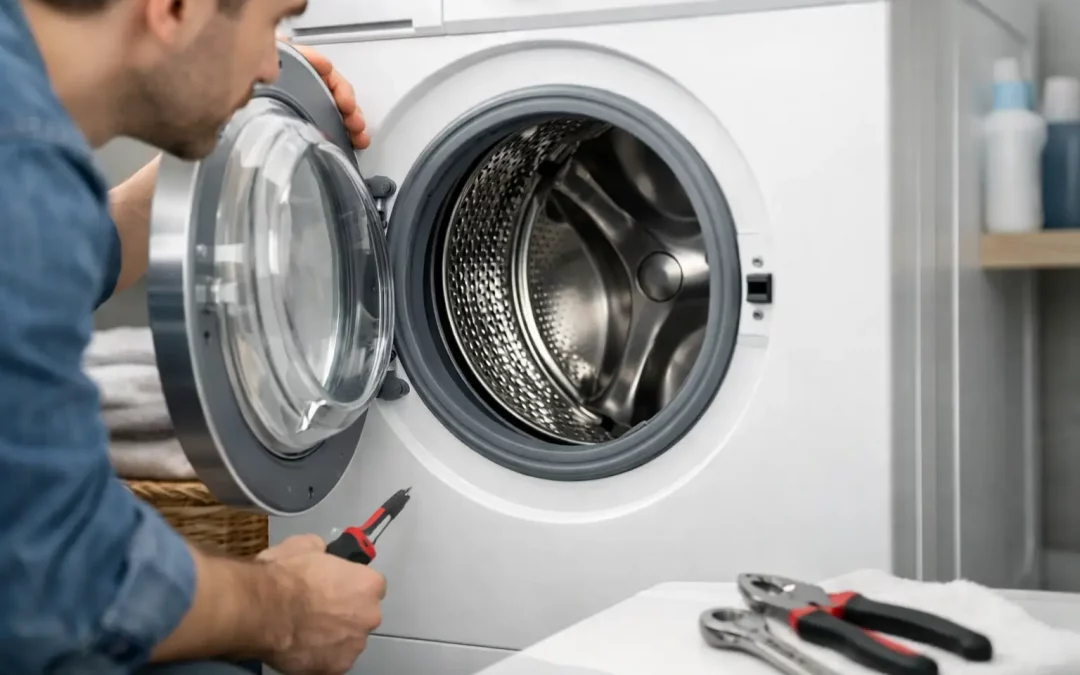
A washing machine drum not spinning is more than a small inconvenience when laundry is piling up. Your washer may still fill with water, drain, or make its usual sounds, yet leave clothes soaking wet at the end of the cycle. Before assuming the machine needs replacement, there are a few safe checks you can make. If the problem continues, a qualified appliance technician can identify the failed part and explain the repair clearly.
Start With the Simple Checks
Some no-spin problems come down to a setting, an uneven load, or a door that is not fully secured. These are worth checking before arranging service, especially if the issue happened suddenly during one load.
First, make sure the washer has power and that the cycle has not been paused. A tripped breaker, loose plug, or interrupted cycle can make the machine appear to have a mechanical problem. If the display is on but the washer will not advance, turn the machine off, wait a few minutes, and restart it once.
Next, check the selected cycle. Delicate, hand-wash, and certain bedding settings use a slower spin speed or may limit spinning to protect fabrics. If your washer has a spin-speed setting, choose a normal or high spin option and run a short test cycle.
An overloaded or unbalanced drum can also prevent spinning. Heavy towels, bath mats, comforters, and a single bulky item can shift to one side of the drum. Modern washers are designed to stop or repeatedly rebalance the load rather than spin violently. Open the door after the machine unlocks, redistribute the laundry, remove a few items if the drum is packed tightly, and try again.
Why Is My Washing Machine Drum Not Spinning?
If the basic checks do not solve the problem, the cause is often a worn, blocked, or failed component. The exact repair depends on whether you have a front-load or top-load washer, the model, and what happens during the cycle.
The lid switch or door lock is not working
A washer will not spin unless it detects that the lid or door is safely locked. On a top-load machine, a faulty lid switch may prevent the spin cycle even if the lid looks closed. On a front-load washer, the door lock assembly may fail to engage or send the correct signal to the control board.
You may notice clicking at the start of the cycle, a door-lock error code, or a machine that washes but stops before spinning. Do not force the door or bypass the safety switch. A technician can test the lock circuit and replace the part if needed.
The drain system is blocked or the pump has failed
Many washers will not spin properly until they have drained the water. If the drum is full of water, the machine may be dealing with a clogged drain hose, blocked pump filter, damaged drain pump, or obstruction inside the pump.
Listen for a humming sound without water draining, or check whether there is standing water in the drum. Small items such as coins, hair clips, socks, and fabric debris can interfere with drainage. Some front-load models have an accessible pump filter, but opening it can release a large amount of water. If you are unsure how to drain the machine safely, it is best to arrange a repair visit rather than risk water damage to your floor.
A worn drive belt is stopping the drum
Many belt-driven washers use a rubber drive belt to transfer power from the motor to the drum. Over time, that belt can stretch, crack, slip off, or break. The washer may make a motor sound, but the drum does not move or only turns weakly.
A belt replacement can be straightforward on some models, but reaching it requires removing panels and correctly reassembling the machine. If the belt came off because of a pulley, bearing, or motor issue, simply putting it back may not address the real cause. Diagnosis matters here.
The motor, motor coupler, or control board has a fault
A washer motor works hard, particularly in homes where laundry runs several times a week. Depending on the model, the problem may involve worn motor brushes, a failed motor coupler, a damaged wiring connection, or an electronic control board that is no longer sending the correct command.
Signs can include a burning smell, grinding noise, intermittent spinning, error codes, or a drum that spins only after several attempts. Unplug the washer if you smell burning or see smoke, and do not run another cycle. Electrical and motor repairs should be handled by an experienced appliance technician.
Drum bearings or suspension parts may be worn
If your washer has become increasingly loud during spin cycles, worn drum bearings or suspension components may be involved. Bearings help the drum rotate smoothly. When they wear out, you may hear rumbling, roaring, scraping, or metal-on-metal sounds, often followed by poor spinning performance.
This type of repair can be more involved because the washer may need significant disassembly. The practical choice depends on the machine’s age, condition, brand, and repair cost. A clear on-site estimate helps you decide whether repair is worthwhile.
What You Can Safely Do Before Booking Repair
Unplug the washer before inspecting anything beyond the controls and laundry load. If water is inside, avoid tilting or moving the appliance until it has been drained. Water, weight, and electrical connections make a washing machine unsafe to handle casually.
You can confirm that the water supply valves are open, inspect the visible portion of the drain hose for kinks, and check for obvious damage around the door latch or lid. Take note of any error code, unusual sound, burning odor, or point in the cycle where the washer stops. These details help the technician diagnose the issue faster.
Avoid taking apart the cabinet, removing electrical panels, or attempting to defeat the lid or door lock. Those shortcuts can cause injury, create a bigger repair, or affect manufacturer coverage. They can also mask the original problem and make diagnosis more difficult.
When to Call a Washer Repair Technician
Call for professional service when the washer repeatedly refuses to spin, leaves water in the drum, makes loud grinding sounds, displays an error code, or trips the breaker. It is also time to book help if you have already balanced the load and restarted the machine without success.
For homeowners in Mississauga, Oakville, Brampton, Etobicoke, and Milton, Insta Fix Repairs provides prompt washer diagnosis with straightforward explanations and transparent estimates. A technician can test the drain system, lock assembly, belt, motor, and controls on-site, then recommend the repair that makes sense for your appliance. Parts and labor are backed by a 90-day warranty.
A Quick Note on Repair Versus Replacement
A washing machine that will not spin does not automatically need to be replaced. A clogged drain pump, faulty door lock, worn belt, or damaged coupler can often be repaired for far less than the cost and disruption of buying a new machine.
Replacement may make more sense when an older washer has multiple major failures, extensive bearing damage, or a costly control-board issue alongside other wear. The right answer is not always the cheapest immediate option. It is the option that gives your household dependable laundry service without repeating the same problem a few months later.
When the drum stops turning, do not let wet laundry sit for days or keep restarting a machine that is clearly struggling. A fast diagnosis can protect your floors, prevent a small issue from becoming a larger one, and get your routine back on track.