

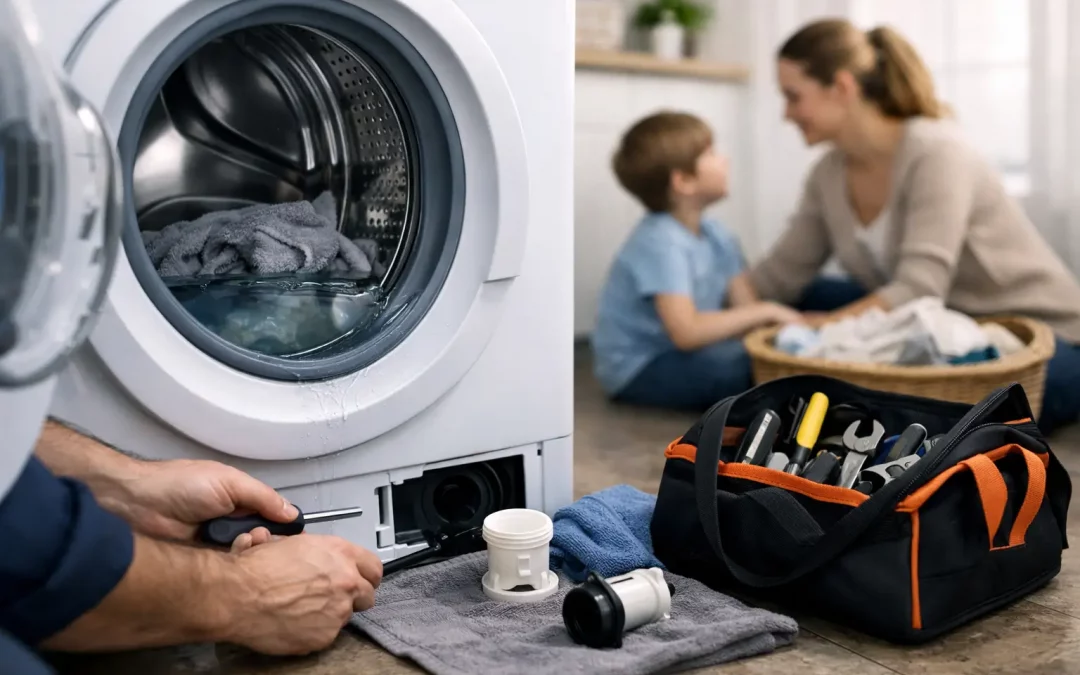
A washer that finishes its cycle with a tub full of water can stop a household in its tracks. Washer not draining repair is often needed when a simple load of laundry turns into soaked clothes, a locked door, and no clear answer about what failed. The good news is that many drainage problems have recognizable causes, and a qualified technician can usually diagnose the issue right at your home.
Before trying to force the machine through another cycle, unplug it. A washer with standing water may have an electrical or mechanical problem, and repeated restart attempts can make a minor issue harder to diagnose. If water is close to overflowing, turn off the water supply valves behind the machine as well.
What a washer that will not drain is telling you
Your washing machine relies on a drain pump, hoses, filters, and sensors to remove water at the right point in the cycle. When one of those components is blocked, damaged, or not receiving the right signal, the washer may pause, hum, display an error code, or stop before the spin cycle.
The exact symptom matters. If you hear the machine humming but no water moves, the pump may be obstructed or failing. If water drains slowly, a clogged hose or drain line is more likely. If the washer drains but will not spin, the problem could involve the lid lock, belt, motor, or control system rather than the drain system alone.
Front-load and top-load washers can fail differently, but both depend on clear water flow and a functioning pump. Samsung, Whirlpool, GE, and other major brands may use different error codes, yet the diagnosis still starts with the same practical questions: Is the water leaving the tub? Is the pump running? Is anything blocking the path?
Safe checks to make before calling for service
There are a few homeowner checks worth making, provided you can do them without moving a heavy appliance or opening electrical panels. Start by confirming that the drain hose behind the washer is not kinked, crushed, or pushed too far down into the standpipe. A hose installed too deeply can create draining problems, while a bent hose can restrict water flow.
Next, look for an obvious blockage at the household drain opening. If water backs up from the standpipe or spills onto the floor during draining, the issue may be in the home’s plumbing rather than the washer itself. In that case, a plumbing professional may be the appropriate next call.
Many front-load washers also have an accessible drain-pump filter behind a small lower panel. Check your owner’s manual before opening it. Have towels and a shallow container ready because water will come out. Coins, hairpins, buttons, lint, and small clothing items can collect in this filter and prevent the pump from working properly.
Do not reach into the machine’s internal components, bypass a door or lid lock, or repeatedly reset the breaker to get the washer running. Those steps can create a safety risk and may turn a repairable problem into a larger one.
Common causes behind washer not draining repair
A clogged drain-pump filter is one of the most common causes, especially in homes with children, pets, or pockets that are not always emptied before laundry. Small objects can jam the pump impeller, causing a humming sound without drainage. Removing the blockage may solve the problem, but a pump that has strained for too long can still need replacement.
A worn or failed drain pump is another frequent issue. Pumps have moving parts and electrical components that wear over time. Signs include unusual grinding, repeated humming, intermittent draining, or a machine that stops with water remaining in the tub. A technician can test whether the pump is receiving power and determine whether replacement is the right fix.
Drain hoses can also clog with lint, fabric residue, or foreign objects. The hose may look normal from the outside while a blockage sits inside a bend. A service visit can confirm whether the restriction is in the hose, the pump, or the household drain line without guesswork.
Lid locks and door locks deserve attention too. Most washers will not spin or drain correctly if the machine cannot confirm that the lid or door is safely closed. You may notice a flashing lock indicator, a door that will not release, or a cycle that stops just before spinning. This can feel like a drainage failure, even when the pump is not the main problem.
Less commonly, the issue involves a pressure switch, wiring connection, control board, or motor-related fault. These parts tell the washer when the tub is empty and when it is safe to continue to spin. They require proper testing, not trial-and-error parts replacement.
Why a fast diagnosis saves more than a load of laundry
Standing water is inconvenient, but it can also lead to odor, mildew, and water damage if it leaks onto flooring. Trying to drain the washer by tipping it, disconnecting hoses without preparation, or running cycle after cycle can make the cleanup worse. A technician can safely drain the machine, inspect the system, and explain what has failed before work begins.
The right repair depends on the diagnosis. Clearing a filter is very different from replacing a drain pump or correcting an installation problem. That is why transparent estimates matter. You should know whether the issue is a blockage, a worn part, or a plumbing concern before approving a repair.
For homeowners in Mississauga, Oakville, Brampton, Etobicoke, and Milton, Insta Fix Repairs provides same-day service when available, on-site diagnosis, and clear, straightforward repair recommendations. The goal is not to sell unnecessary work. It is to get your washer draining properly with minimal disruption to your routine.
What to expect during a professional repair visit
A proper service call begins with questions about the symptoms: when the problem started, whether the washer makes noise, whether an error code appeared, and whether the issue happens on every cycle. The technician then checks the drain path, pump, hoses, filter, door or lid lock, and relevant electrical connections.
Once the cause is confirmed, you receive an explanation in plain language and an estimate before the repair proceeds. If a replacement part is needed, the technician can advise whether repair makes financial sense based on the washer’s age, condition, and the cost of the repair. A newer machine with a failed pump is often worth repairing. An older washer with several major issues may call for a more careful cost comparison.
After repair, the washer should be tested through a drain and spin function to confirm that water leaves the tub as it should. Ask any questions you have before the visit ends, including how to clean the filter or avoid repeat clogs. Reliable appliance service should leave you with a working machine and a clear understanding of what happened.
Preventing future drainage problems
A few small habits can reduce the chance of another drainage interruption. Empty pockets before every wash, especially for coins, tissues, and small objects. Wash small items such as baby socks or delicate garments in a mesh bag so they are less likely to move into areas where they do not belong.
If your washer has a drain-pump filter, clean it according to the manufacturer’s guidance. Use the correct amount of high-efficiency detergent if your model requires it, since excess suds and residue can contribute to buildup over time. Also leave the door or lid open after a load when practical, allowing the tub to dry and reducing moisture-related odors.
A washer that will not drain rarely fixes itself, and waiting can mean wet laundry, a stronger odor, or a leak at the worst possible time. Turn the machine off, avoid risky DIY steps, and arrange a professional diagnosis so laundry can get back to normal without the uncertainty.