
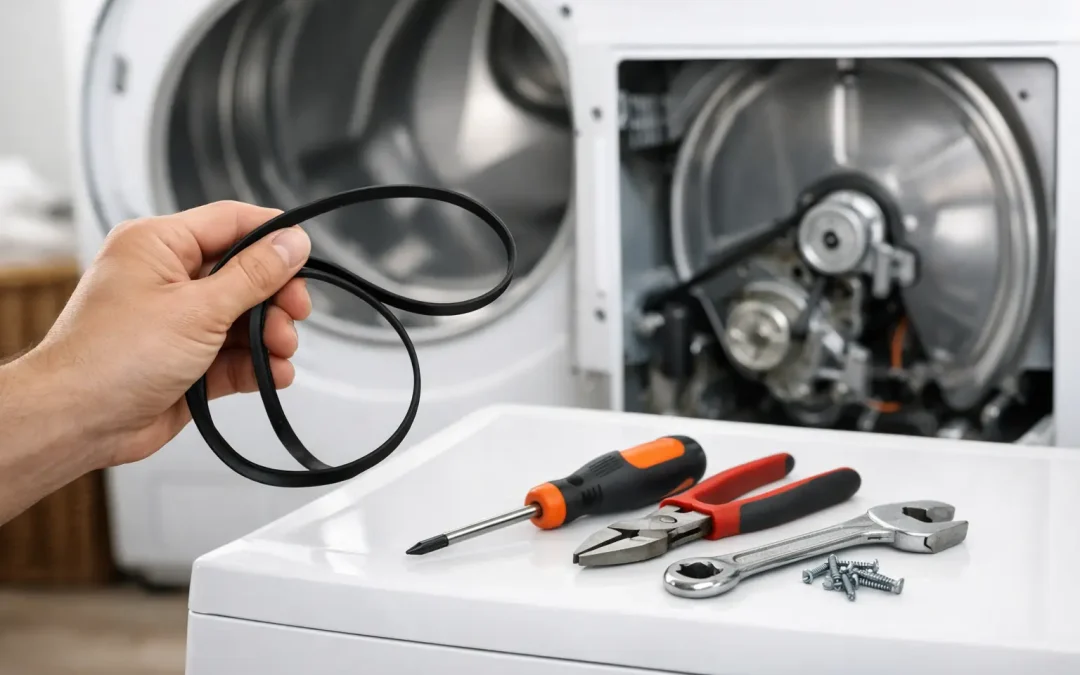
A dryer that runs but does not tumble can bring laundry day to a complete stop. Knowing when to replace dryer belt components can help you recognize a real mechanical problem early, avoid repeated failed cycles, and decide whether it is time to call for repair.
The dryer belt is a simple part with a big job. It wraps around the drum and connects it to the drive motor, allowing the drum to rotate while warm air moves through your clothing. When the belt stretches, frays, slips, or breaks, your dryer may still power on and heat up, but it cannot do the work it was designed to do.
When to Replace a Dryer Belt
A dryer belt should be replaced when it is broken, visibly worn, or no longer keeps the drum turning reliably. There is no fixed replacement schedule because belt life depends on how often the dryer is used, the size of typical loads, and whether other drive components are putting extra strain on it.
For many households, a belt can last several years. A large family running frequent loads may wear through it sooner than a household that uses the dryer once or twice a week. Overloading the dryer, drying heavy bedding repeatedly, and continuing to use a dryer that squeals or thumps can also shorten belt life.
The key is not to replace a belt based on age alone. Replace it when the symptoms and an on-site inspection show that it has failed or is close to failing.
The dryer runs, but the drum does not turn
This is the most familiar sign of a broken dryer belt. You may hear the motor humming or running after pressing Start, and the control panel may appear normal, but the drum stays still.
A broken belt is a likely cause, especially if the drum turns very easily by hand when the dryer is off. That said, a failed idler pulley, worn drum roller, damaged motor, or door switch issue can create similar symptoms. A technician should confirm the cause before any part is replaced.
You hear a sharp snap, then the dryer stops tumbling
Dryer belts can crack or break suddenly after they become dry, stretched, or frayed. Some homeowners hear a quick snapping sound during a cycle, followed by a drum that no longer rotates.
Turn the dryer off rather than restarting it several times. Repeated attempts can add strain to the motor and may make it harder to identify whether another drive component contributed to the failure.
The drum turns inconsistently or slips
A belt does not always break all at once. Before it fails, it may lose tension and slip around the drum. You may notice that the drum starts slowly, pauses during a cycle, or turns only when there is a very small load inside.
This symptom deserves prompt attention. A slipping belt can overheat from friction and may indicate that the tension pulley or drum rollers need service as well.
You notice squealing, thumping, or scraping noises
A worn belt may squeal as it moves across the pulley system, but noise alone does not prove the belt is bad. Thumping often points to worn rollers or an uneven drum, while scraping can come from a damaged glide, seal, or foreign object caught near the drum.
The practical answer is to treat new or worsening dryer noises as a reason for diagnosis, not as a reason to order a belt blindly. Replacing only the belt will not solve the problem if a seized roller or failing pulley caused the belt to wear down in the first place.
There is a burning rubber smell
A hot, rubber-like odor is a stop-use warning. It can happen when a belt slips, rubs against a damaged component, or overheats due to excess friction. Turn off the dryer, unplug it if it is safe to do so, and avoid running another load until the issue has been checked.
A burning smell can also be related to lint buildup or an electrical problem, so it should never be dismissed as a normal dryer odor.
What Causes a Dryer Belt to Wear Out?
Normal use eventually wears down any moving part, but belts rarely fail without a reason. Heat, friction, weight, and age all take a toll on the rubber material. If the belt is cracked, glazed, frayed along the edges, or stretched enough to lose tension, replacement is usually the right repair.
Heavy loads are another common factor. Comforters, towels, and packed laundry loads put more resistance on the drum. One oversized item may not cause immediate damage, but regularly forcing the dryer to handle more than it can turn comfortably can wear out the belt and supporting parts faster.
A failing idler pulley or drum roller can be the hidden cause. These components help the belt move smoothly and maintain proper tension. When a pulley sticks or a roller binds, the belt has to work harder, which can cause premature wear. This is why a complete drive-system inspection matters.
Can You Keep Using a Dryer With a Bad Belt?
If the drum is not turning, do not keep using the dryer. Clothes will not dry properly, and running the appliance can put unnecessary stress on the motor. In some models, the heating system may still operate even though the drum has stopped, creating a risk of overheated fabrics and poor airflow.
If the dryer is still turning but making unusual noise, it may continue working for a short time, but waiting is a trade-off. You may get through one more load, or the belt may break mid-cycle and leave wet laundry inside. More concerning, a worn belt may be a symptom of a pulley or roller issue that can become more expensive if left unresolved.
For a burning smell, grinding noise, or drum that stops and starts, stop using the appliance and arrange service promptly.
Why Professional Diagnosis Saves Time
Replacing a dryer belt involves opening the cabinet, removing the drum, routing the replacement belt correctly, and checking the tension system. The work can look straightforward in a video, but dryer designs vary by brand and model. A belt installed incorrectly may slip off, twist, or fail again quickly.
More importantly, the belt may not be the only issue. A qualified technician can inspect the drum rollers, idler pulley, motor, glides, blower wheel, and venting concerns while the dryer is open. That helps prevent the frustrating situation where a new belt is installed but the dryer is still noisy, slow, or unable to tumble.
For homeowners who rely on their dryer every week, professional repair also means clearer answers. You should know what failed, what needs to be replaced, what can wait, and what the repair will cost before work begins.
How to Help Your New Dryer Belt Last Longer
Once the repair is complete, a few habits can reduce strain on the dryer. Avoid packing the drum tightly, especially with heavy items. Clean the lint screen after every load, and make sure exterior venting is not blocked. Restricted airflow makes the dryer run longer and hotter, adding stress throughout the appliance.
Pay attention to changes before they become a breakdown. A new squeak, thump, or slow-starting drum is easier to address before the belt snaps. If your dryer begins leaving clothes damp or needs multiple cycles, the cause may be airflow, heating, or drum movement, and a diagnosis can separate those issues quickly.
A broken dryer belt does not always mean a major repair, but it should not be ignored. Fast, straightforward service can get the drum turning again while checking the components that helped cause the problem. Insta Fix Repairs provides on-site dryer diagnosis, clear estimates, and dependable repair support so laundry can get back to normal with less disruption.