

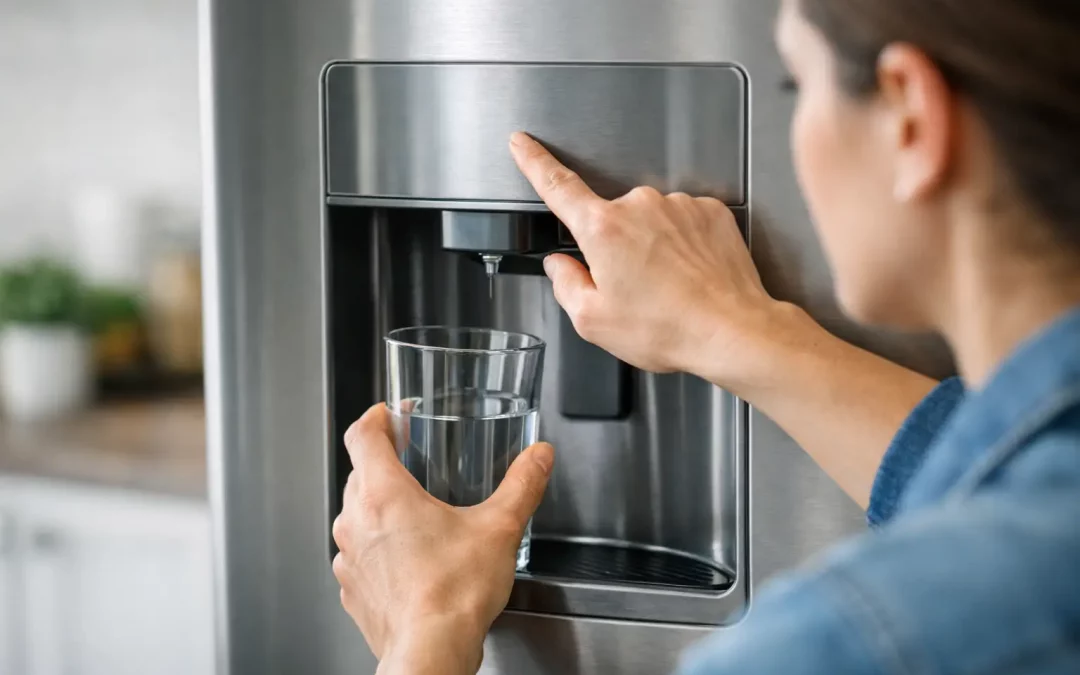
A fridge water dispenser not working is more than a minor inconvenience when your household relies on it for cold drinking water, coffee, school lunches, and ice. The good news is that the problem is often isolated to a filter, water supply, frozen line, or dispenser component – not the entire refrigerator. A few safe checks can help you understand what is happening before arranging service.
Start With the Simple Checks
Before assuming a major repair is needed, make sure the refrigerator has power and the display panel is responding normally. If the interior lights are on but the dispenser will not respond, look for a control lock or child lock setting. On many Whirlpool, Samsung, GE, LG, and Frigidaire refrigerators, holding a designated button for several seconds will turn the lock on or off.
Next, try the ice dispenser if your refrigerator has one. If both water and ice have stopped, the issue may involve the water supply, filter housing, door switch, or electronic controls. If ice still dispenses but water does not, the problem is more likely limited to the water line, water inlet valve, filter, or water dispenser assembly.
Also check whether the refrigerator door is fully closed. Most models use a door switch to prevent dispensing when the door is open. A damaged or stuck switch can make the refrigerator think the door is still open, even when it is shut.
Check the Water Supply Behind the Refrigerator
Your refrigerator needs a steady household water supply to fill the ice maker and dispenser. Carefully pull the unit forward if it can be done safely, taking care not to scratch the floor or stretch the power cord. Inspect the water line for kinks, crushing, loose connections, or visible leaks.
Confirm that the shutoff valve supplying the refrigerator is fully open. This valve is often located behind the refrigerator, under the kitchen sink, in a nearby cabinet, or in the basement. A partially closed valve can reduce water pressure enough to cause slow flow, sputtering, or no water at all.
Low water pressure can be misleading. You may hear the dispenser hum when you press the paddle, but little or no water comes out. In that case, the refrigerator may be calling for water correctly, yet not receiving enough supply pressure to move it through the system.
If you find a leak, turn off the water supply and avoid using the dispenser until the connection is repaired. Water near flooring, cabinetry, or electrical components can create a much bigger problem if left unattended.
Replace or Reseat the Water Filter
A clogged or incorrectly installed filter is one of the most common reasons a refrigerator water dispenser stops working. Most refrigerator filters should be replaced about every six months, although the right schedule depends on water quality and household use.
If water flow gradually became weaker before it stopped, the filter is a likely suspect. Remove the existing filter and reinstall it carefully, following the direction indicators on the filter and housing. A filter that is not fully seated can block water flow or cause leaking.
After installing a new filter, dispense water for several minutes to clear air from the line. It is normal for water to sputter briefly while trapped air works its way out. If the water remains cloudy, weak, or completely absent after flushing, another component may be involved.
Avoid using an off-brand filter that does not fit properly just to save a few dollars. A poor fit can cause low flow, leaks, or damage to the filter housing. The filter is a simple part, but it directly affects the refrigerator’s water system.
Why a Fridge Water Dispenser May Freeze Up
If your fridge water dispenser not working problem started during cold weather or after the refrigerator temperature was adjusted, a frozen water line is possible. The water tube inside the refrigerator door is especially prone to freezing on certain models.
A common sign is hearing a click or hum when you press the dispenser paddle, but receiving no water. The inlet valve may be opening, but water cannot pass through the frozen section of tubing. In some cases, the dispenser works intermittently as the line partially thaws.
Check the refrigerator temperature setting. The fresh food section should generally stay around 37 to 40 degrees Fahrenheit. Setting it too cold can freeze food near the vents and may freeze the dispenser line. Do not use sharp objects, open flames, or high heat to thaw a suspected frozen line. Those methods can damage plastic tubing, door insulation, and electrical components.
A temporary thaw may restore water, but repeated freezing usually points to an airflow, temperature, insulation, or door-line design issue. A technician can identify why the line is freezing instead of treating the symptom over and over.
Listen for the Water Inlet Valve
The water inlet valve is located at the back of the refrigerator and opens when the dispenser calls for water. When someone presses the water paddle, you may hear a quiet hum or buzz from the rear of the unit.
No sound at all can indicate a dispenser switch, wiring, control board, or door switch problem. A humming sound with no water may point to a blocked filter, frozen line, restricted water supply, or a failing inlet valve. The sound alone is not a final diagnosis, but it gives a repair technician a useful starting point.
Water inlet valves can fail electrically or mechanically. They may stop opening, open only partially, or leak after dispensing. Because diagnosis involves electrical testing and access to water connections, this is usually a better repair for a qualified appliance technician than a DIY project.
When the Dispenser Paddle or Controls Are the Problem
Sometimes the refrigerator makes ice normally, the filter is new, and the water supply is fine – but nothing happens when you press the dispenser paddle. This can happen when the paddle switch, microswitch, wiring harness, display board, or main control board fails.
On refrigerators with an external display, look for error codes, flashing lights, or buttons that no longer respond. On models with a mechanical paddle, the paddle may feel loose, cracked, or fail to press the internal switch. These parts wear out over time, particularly in busy family kitchens where the dispenser is used throughout the day.
Control-related repairs vary by brand and model. Replacing a switch may be straightforward, while diagnosing a control board requires proper testing to avoid replacing parts that are still working. That difference matters because guessing can turn a manageable repair into an expensive one.
Do Not Ignore Slow Water Flow or Leaks
A dispenser that still works but produces a thin stream deserves attention before it fails completely. Slow flow can be caused by a clogged filter, low household pressure, a pinched line, mineral buildup, or a weakening valve.
Leaks around the dispenser tray, under the refrigerator, or near the filter housing should also be addressed promptly. A small drip can damage floors and cabinets over time. If the leak is coming from the filter area, turn off the water supply, remove the filter if possible, and schedule an inspection rather than repeatedly tightening parts that may be cracked or worn.
When to Call for Refrigerator Repair
Call for professional service when basic checks do not restore water flow, when the refrigerator is leaking, or when you suspect an electrical or valve issue. You should also arrange service if the dispenser line keeps freezing, the control panel is malfunctioning, or the refrigerator is making unusual noises while trying to dispense water.
A clear diagnosis should identify the actual cause before parts are replaced. At Insta Fix Repairs, our technicians provide on-site refrigerator diagnosis, explain the repair in plain language, and provide a transparent estimate before work begins. Homeowners in Mississauga, Oakville, Brampton, Etobicoke, and Milton can count on fast scheduling, with a 90-day warranty on parts and labor for added peace of mind.
Until help arrives, use bottled or tap water for drinking and avoid forcing the dispenser paddle. A calm, timely repair protects your refrigerator, prevents water damage, and gets one more essential part of your kitchen routine back on track.