
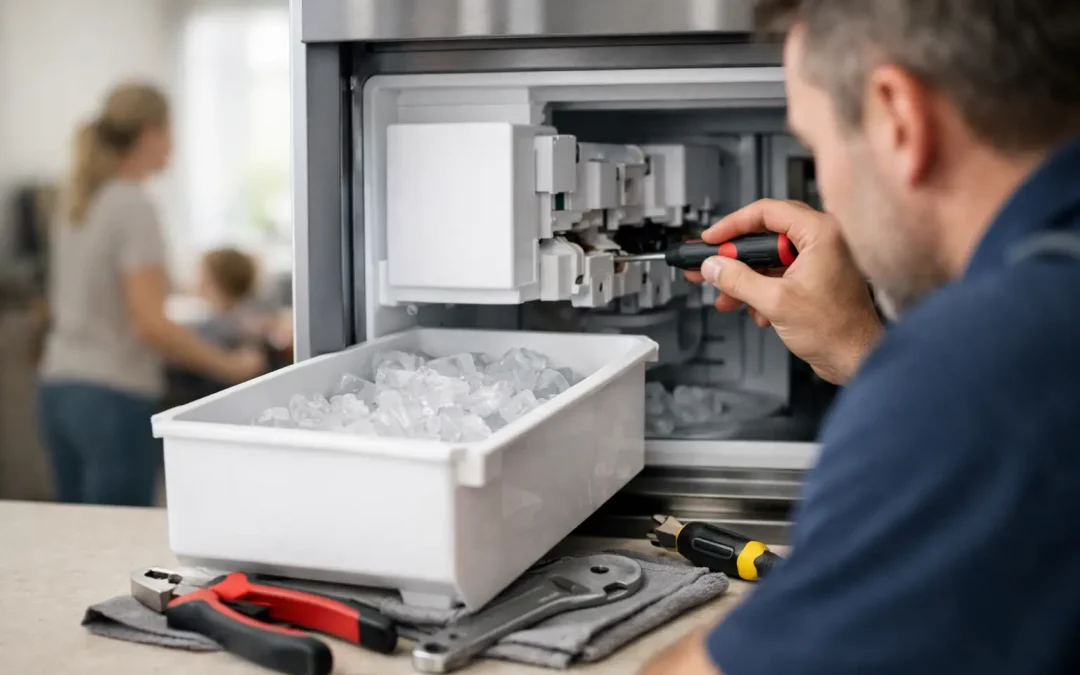
A refrigerator can keep food cold and still create a daily headache when the ice bin stays empty. If you need ice maker not working repair, the cause may be as simple as a switched-off ice maker or a blocked water supply. In other cases, a worn inlet valve, frozen fill tube, faulty sensor, or control problem needs professional diagnosis.
The good news is that most ice maker failures leave clues. A quick, safe check can help you determine whether there is an easy fix or whether it is time to schedule service before the problem affects your refrigerator’s water system or food storage.
Start With the Simple Ice Maker Checks
Before moving the refrigerator or taking anything apart, make sure the ice maker is actually turned on. Many models have a small wire arm, a switch, or a touch-screen setting that disables ice production. The wire arm should be in the down position. If it is raised, the unit reads the ice bin as full and stops making ice.
Next, check the ice bin. Ice can freeze into a solid mass when cubes partially melt and refreeze, especially if the freezer door has been left open or the freezer temperature fluctuates. Remove clumped ice, wash and dry the bin, then reinstall it correctly. A bin that is not seated fully may keep the dispenser or ice maker from operating as expected.
Give the system enough time after making adjustments. Many ice makers need 12 to 24 hours to begin producing a full supply of ice again. If you recently installed the refrigerator, replaced a water filter, or restored power after an outage, this delay can be normal.
Check Freezer Temperature and Airflow
An ice maker needs a freezer that is cold enough to complete its cycle. For most refrigerators, the freezer should be set around 0°F. If it is warmer than about 10°F, water may not freeze properly, cubes may come out small or hollow, or the ice maker may stop cycling altogether.
Check whether frozen food packages are blocking air vents inside the freezer. Poor airflow can make one area cold while leaving the ice maker compartment too warm. Also look at the door gasket for gaps, tears, or debris that prevents a tight seal. Frost around the door or frequent temperature swings can point to an air leak.
Avoid turning the freezer to its coldest setting as a first response. Extremely cold temperatures can freeze the ice maker fill tube or create other airflow issues. A consistent temperature is more useful than an aggressively low setting.
If the Freezer Is Not Cold Enough
A freezer that is struggling to stay cold is not just an ice maker problem. It can indicate dirty condenser coils, a failed fan, a defrost issue, or a cooling-system concern. If food is soft, frost is building up, or the refrigerator is running constantly, arrange refrigerator service instead of focusing only on the ice maker.
Make Sure Water Is Reaching the Refrigerator
Most automatic ice makers depend on the same water supply that feeds the door dispenser. Try dispensing a glass of water, if your refrigerator has that feature. Weak flow or no water usually points to a water supply issue rather than an ice maker-only failure.
Confirm that the water shutoff valve behind or beneath the refrigerator is open. A valve can be bumped during cleaning, moving, or nearby plumbing work. Check the water line for visible kinks, crushing, or leaks. Do not pull the refrigerator aggressively – water lines can crack or disconnect.
A clogged or overdue water filter is another common reason for slow water flow and small ice cubes. Replace the filter according to the refrigerator manufacturer’s schedule, then run water through the dispenser for several minutes to clear air from the line. Some models pause ice production after a filter replacement until the system is fully primed.
If there is no dispenser, a technician can test the water inlet valve and supply line safely. These components use electricity and pressurized water, so they are not a good place for trial-and-error repairs.
Common Problems That Need Ice Maker Not Working Repair
When the basic checks do not restore production, the fault is often inside the ice-making system. Professional diagnosis is useful because several different parts can create the same symptom: an empty bin.
A frozen fill tube is one frequent example. This narrow tube sends water into the ice maker mold. When it freezes, no water reaches the tray. The underlying cause may be a temperature problem, a leaking inlet valve, or an ice maker that is not cycling correctly. Simply thawing the tube can get ice moving again, but the issue may return if the root cause is not addressed.
A failing water inlet valve may open too slowly, fail to open, or drip after the fill cycle. That can lead to no ice, undersized cubes, overflow, or a frozen fill tube. An ice maker motor or module can also fail to rotate the ejector arms and release finished cubes. On newer refrigerators, a broken sensor, control board, or dispenser interface may interrupt the ice-making cycle.
These repairs depend on the refrigerator model and the failed part. Replacing components without testing can waste money and may not solve the problem. A qualified technician can verify water pressure, temperature, electrical signals, valve operation, and the condition of the ice maker assembly before recommending a repair.
Signs You Should Call for Service Now
A quiet ice maker that has simply stopped producing is inconvenient. Water leaks, electrical symptoms, or cooling problems deserve faster attention. Schedule service promptly if you notice any of the following:
- Water pooling under or behind the refrigerator
- Ice forming in the wrong area of the freezer
- A burning smell, clicking, or repeated buzzing
- A freezer that is warming up or food that is beginning to thaw
- An ice maker that overfills, spills, or keeps running
Turn off the refrigerator’s water supply if you see an active leak. If there is a burning smell or signs of electrical damage, unplug the refrigerator only if you can do so safely and avoid using the appliance until it has been inspected.
What to Expect From a Professional Repair Visit
A good repair visit should give you answers, not add uncertainty. The technician should inspect the ice maker, freezer temperature, water line, inlet valve, filters, and relevant controls. After identifying the cause, you should receive a clear explanation of what failed, what the repair involves, and the expected cost before work begins.
For homeowners dealing with an empty ice bin before a gathering, a same-day appointment can make a real difference. Insta Fix Repairs provides on-site appliance diagnosis and clear, straightforward estimates for homeowners who need dependable refrigerator and ice maker service. Parts and labor are backed by a 90-day warranty, so you are not left guessing about the work after the technician leaves.
Repair is often the sensible option when the refrigerator is otherwise cooling well and the failed part is limited to the ice maker, valve, or water system. If the appliance also has major cooling problems, repeated electronic failures, or is near the end of its expected life, a technician can help you weigh the repair cost against replacement rather than pushing a one-size-fits-all answer.
Prevent the Next Ice Maker Problem
Once ice production is back, small habits can help keep it reliable. Change the water filter on schedule, keep freezer vents clear, and close the freezer door firmly. If the ice bin is not used often, empty it periodically so old cubes do not fuse into a solid block.
When you hear unusual noises, see frost near the ice maker, or notice cubes getting smaller, act early. A quick repair is usually easier than waiting for a small water-flow or temperature issue to turn into a leak, a frozen line, or a refrigerator that cannot keep up with your household.