

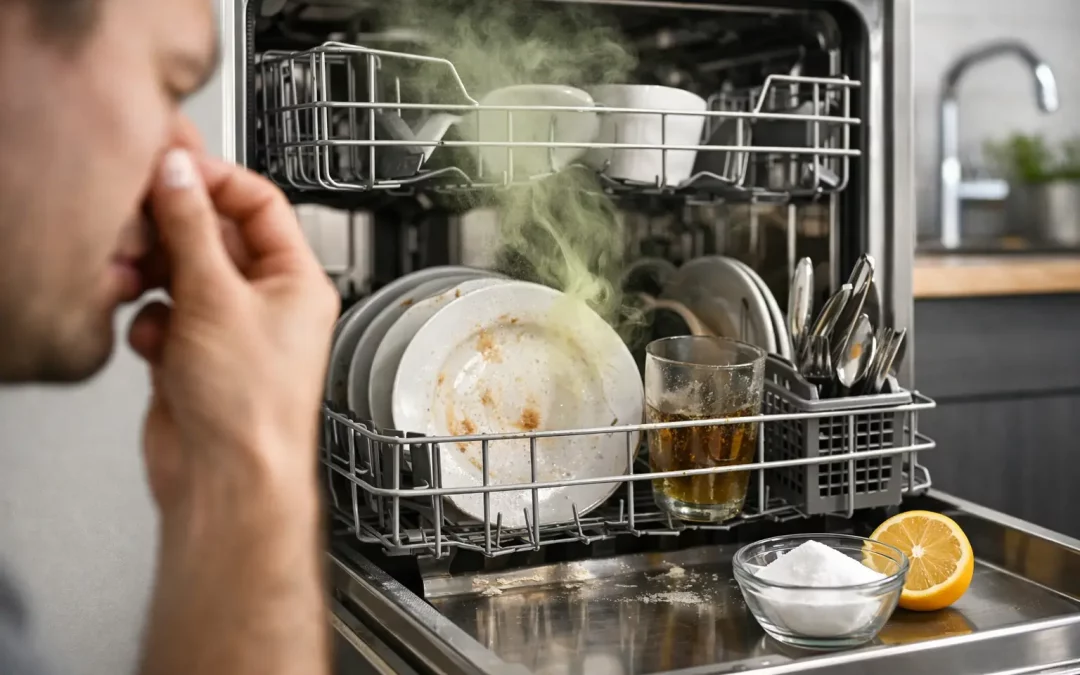
A clean load of dishes should not leave your kitchen smelling like a damp basement, sewage, or old food. So, why does dishwasher smell bad even when it seems to run normally? In most homes, the odor comes from trapped food residue, stagnant water, or a drainage issue that needs attention before it becomes a bigger repair.
The good news is that many dishwasher smells can be solved with careful cleaning. If the odor keeps returning, however, your dishwasher may not be draining or washing as it should. That is when a fast, professional diagnosis can save you from repeat cleaning cycles, water damage, and a machine that stops working when you need it most.
Why Does a Dishwasher Smell Bad After a Wash?
Dishwashers are designed to wash away grease and food particles, but they cannot remove everything on their own. Small bits of food, cooking oil, detergent residue, and minerals can collect in areas you do not see during daily use. Warmth and moisture then create the conditions for bacteria and mildew to grow.
A mild odor after an occasional heavy load may simply mean the filter needs cleaning. A strong, sour, fishy, or sewage-like smell is more likely to point to standing water, a blocked drain path, or dirty water flowing back into the dishwasher.
The exact smell can offer a useful clue. A musty odor often comes from mold or residue inside the tub and door seal. A rotten-food smell usually means the filter, spray arms, or drain area is holding debris. A sewer smell deserves quicker attention because it can involve the drain hose connection or plumbing setup.
Common Causes of Dishwasher Odors
A clogged or dirty filter
The filter catches food particles before they can travel farther into the dishwasher’s drain system. Over time, it can become coated with grease, coffee grounds, pasta pieces, labels, and other debris. This buildup does not just smell bad. It can reduce cleaning performance and leave dishes with a film or bits of food after a cycle.
Most dishwasher filters sit at the bottom of the tub beneath the lower rack. Many twist out by hand, but the process varies by model. Remove the filter carefully, rinse it under warm running water, and use a soft brush with mild dish soap to loosen residue. Do not use a wire brush, as it can damage the fine mesh.
Food trapped around the door and seals
The rubber gasket around the dishwasher door is easy to overlook. Grease, sauce, and moisture collect along the lower edge and in the folds of the seal, where they can create a musty smell. The same applies to the lip at the bottom of the door.
Wipe these areas with a soft cloth and warm, soapy water. Check the gasket for tears, hardening, or sections that no longer sit flat. A damaged seal can allow leaks and may need replacement rather than cleaning.
Standing water in the bottom of the tub
A small amount of water around the filter area can be normal on some models. A visible pool of dirty water after a completed cycle is not. It means the dishwasher is not draining fully, leaving food particles and bacteria behind between washes.
The cause may be a blocked filter, a clogged drain hose, a failing drain pump, or a problem with the home plumbing. If you hear humming but the water does not leave the tub, avoid running repeated cycles. That can make an overflow more likely and will not fix the underlying blockage.
A dirty spray arm or sump area
Spray arms use small openings to distribute water across your dishes. Those openings can clog with food particles or mineral deposits, especially in homes with hard water. When water circulation is reduced, grease and detergent may remain inside the dishwasher instead of washing away.
The sump area beneath the filter can also hold debris that is harder to reach. If basic filter cleaning does not improve the smell and dishes are coming out dirty, the dishwasher may need a more thorough service inspection.
Drain hose or garbage disposal problems
A dishwasher drain hose should be installed to prevent sink water from flowing backward into the appliance. If the hose lacks a proper high loop or air gap, wastewater from the sink or garbage disposal can enter the dishwasher. This often causes a sewage-like odor, especially after the sink is drained.
If your dishwasher connects to a new garbage disposal, make sure the installer removed the disposal’s dishwasher drain plug. A missed plug can prevent drainage completely. A crushed, kinked, or clogged hose can create similar symptoms.
This is one issue where the right fix depends on your kitchen setup. Cleaning the dishwasher alone will not solve an incorrect drain hose installation or a disposal connection problem.
Using too little detergent or the wrong cycle
Quick or eco cycles use less water and may not fully clear heavy grease from cookware, cutting boards, or casserole dishes. Using too little detergent can also leave residue behind. On the other hand, using too much detergent may leave a soapy film that traps odors and soil.
For a dishwasher that smells after greasy loads, scrape dishes well before loading and use a normal or heavy cycle when appropriate. You do not need to pre-rinse every plate, but solid food scraps should go into the trash or disposal first.
How to Remove a Bad Dishwasher Smell Safely
Start by emptying the dishwasher and taking out the bottom rack. Remove and clean the filter, then wipe the door gasket, door edges, and the area around the filter housing. Check for standing water or obvious debris before putting everything back.
Next, run a hot cycle using a dishwasher cleaner made for your appliance. These products help break down grease and mineral buildup in areas you cannot easily reach. You can also run an empty hot cycle with a cup of white vinegar placed upright on the top rack, followed by a separate rinse cycle if needed.
Do not mix vinegar with bleach or use both products in the same cycle. Never use bleach in a stainless steel dishwasher tub, and avoid harsh drain cleaners inside the appliance. They can damage internal parts, seals, and hoses while failing to remove the real source of the problem.
After the cleaning cycle, leave the door slightly open for a while so the interior can dry. If the smell disappears and does not return, regular filter cleaning and better loading habits may be all you need.
When a Dishwasher Smell Means You Need Repair
Call for service when the odor returns soon after cleaning, especially if you also notice poor washing results, water in the bottom of the tub, leaking, unusual noises, or a drain error code. Those signs suggest more than ordinary residue.
A technician can inspect the drain pump, drain hose, check valve, filter housing, spray arms, and plumbing connection. They can also determine whether a failing part is allowing dirty water to stay in the machine. Replacing a worn pump or correcting an improperly routed hose is more reliable than masking the odor with another cleaning tablet.
For homeowners in Mississauga, Oakville, Brampton, Etobicoke, and Milton, Insta Fix Repairs provides dishwasher diagnosis with clear, straightforward advice. A technician can identify whether the problem is in the appliance, the drain connection, or both, then explain the repair options before work begins.
Keep the Smell From Coming Back
Clean the filter about once a month, or more often if your household cooks frequently or runs the dishwasher daily. Wipe the door seal periodically and run a dishwasher cleaner on a regular schedule, particularly if you have hard water.
Use the right cycle for heavily soiled loads, keep spray-arm openings clear, and check the bottom of the tub after a cycle for leftover water. If you use a garbage disposal, run cold water through it before starting the dishwasher so the drain path is as clear as possible.
A dishwasher should make cleanup easier, not add an unpleasant smell to your kitchen. If careful cleaning does not restore a fresh, clean interior, arranging a prompt inspection is the practical next step to protect your appliance and get your routine back on track.