

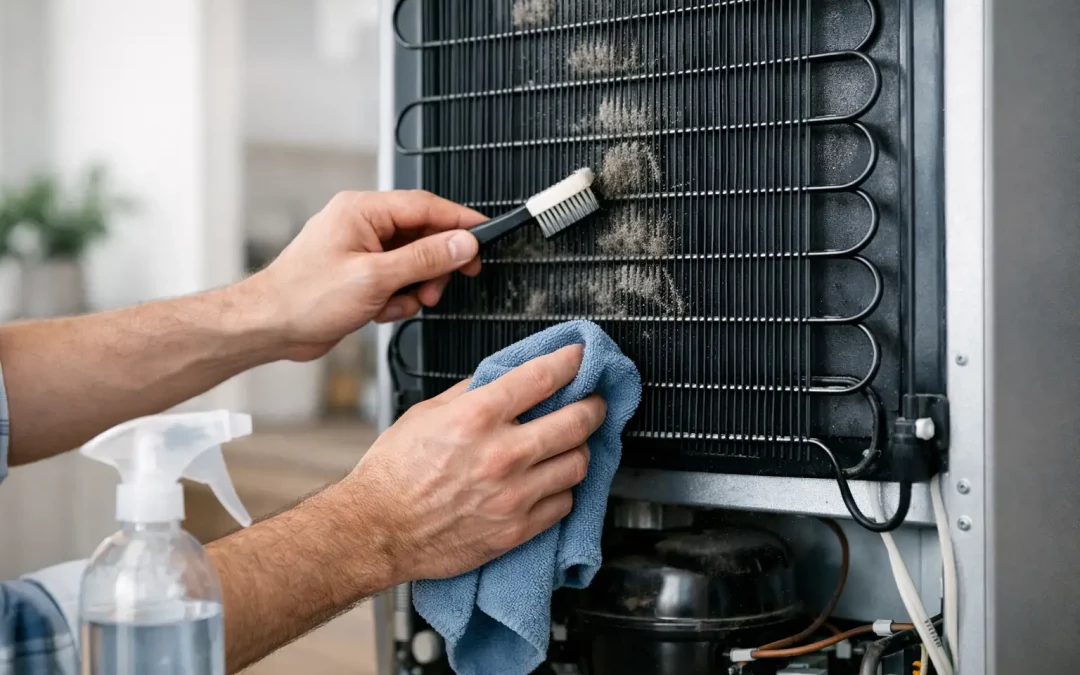
A refrigerator that runs constantly, feels warm along the sides, or struggles to keep milk cold may not need a major repair. Sometimes, refrigerator coil cleaning is the practical first step. Dust, pet hair, and kitchen debris can collect around the condenser coils, trapping heat that your refrigerator needs to release.
For busy households, that buildup can mean higher energy use, extra wear on the compressor, and less reliable food storage. Cleaning the coils is simple on many models, but it is not the answer to every cooling problem. Knowing the difference can save time, protect your groceries, and help you decide when a technician should take over.
What refrigerator coils do
Your refrigerator removes heat from the food compartment and releases it outside the unit through its condenser system. The condenser coils are the part of that system designed to shed heat. When air cannot move freely around the coils, the refrigerator has to work harder to maintain the temperature you set.
On many refrigerators, the coils sit underneath the cabinet or behind a lower front grille. Some newer models place them in less visible areas, including the back or within the cabinet walls. That design can make access harder, and it also means not every refrigerator should be cleaned the same way.
A light layer of dust may not cause an immediate failure. Heavy buildup, especially in homes with shedding pets, can reduce airflow enough to make a noticeable difference. You may hear the refrigerator running longer than usual, feel excess heat around the unit, or find that the freezer stays cold while the fresh-food section becomes inconsistent.
Signs your refrigerator coils may need cleaning
Coil cleaning is worth considering when the refrigerator seems to be working harder than normal but is still cooling. The clearest sign is visible dust or pet hair around accessible coils, vents, or the toe-kick area.
Other common signs include a compressor that seems to run for long stretches, more warmth around the lower front or back of the refrigerator, and gradually rising utility costs without another obvious cause. A musty concentration of dust behind the fridge is also a good reason to inspect the area.
However, poor cooling can also come from a failed evaporator fan, damaged door gasket, defrost problem, blocked air passage, faulty temperature sensor, or sealed-system issue. If food is warming quickly, the freezer is thawing, or the refrigerator is making loud clicking or grinding sounds, do not assume dirty coils are the only cause. Move perishable food to a safe cold location and arrange service promptly.
How to handle refrigerator coil cleaning safely
Before moving the refrigerator, protect the floor and make sure there is enough room to work. Refrigerators are heavy, and pulling one forward too quickly can damage flooring, pinch a water line, or strain the power cord.
Start by unplugging the unit. If you have a refrigerator with an ice maker or water dispenser, check that the water line has enough slack before moving the appliance. Avoid bending or pulling the line. If it appears brittle, kinked, or difficult to access, it is safer to leave the refrigerator in place and call for help.
For most accessible coil areas, you need only a vacuum with a brush attachment, a refrigerator coil brush, a flashlight, and a soft dry cloth. Remove the lower grille or rear access panel only if it is clearly designed to come off. Keep screws in a safe place and never force plastic tabs or panels.
Use the brush gently to loosen dust, then vacuum it up. Work slowly around wires, the condenser fan, and nearby components. Do not use water, cleaning sprays, compressed air, or sharp tools. Compressed air often sends debris deeper into the refrigerator cabinet, while moisture around electrical components creates unnecessary risk.
Once the area is clean, check that the grille and panel are fully reinstalled. Plug the refrigerator back in and listen for normal operation. It may take several hours for temperatures to stabilize after the doors have been open or the appliance has been moved.
Do not forget the space around the refrigerator
Airflow around the appliance matters as much as dust on accessible coils. Boxes, bags, and tight cabinetry can block the ventilation space your refrigerator needs. Make sure nothing is pressed against the back or covering a front vent.
Also check the door gaskets. A dirty, cracked, or loose gasket lets warm room air into the refrigerator, forcing the system to run longer even when the coils are clean. Wipe the gasket with a damp cloth, dry it thoroughly, and make sure the door closes evenly.
How often should coils be cleaned?
For many households, once or twice a year is enough. Homes with dogs, cats, heavy cooking activity, or a refrigerator located near a laundry area may benefit from checking every three to six months. The right schedule depends on how quickly debris collects and whether the coil area is exposed.
Some modern refrigerators use condenser designs that require little or no homeowner coil maintenance. If you cannot locate accessible coils or a removable grille, consult the appliance manual rather than disassembling the cabinet. A maintenance task should not turn into a damaged panel, disconnected fan wire, or voided warranty.
When cleaning is not enough
A clean coil area will not repair an electrical or mechanical fault. If the refrigerator is not cooling after you clean accessible coils and restore power, the problem needs diagnosis. The same applies when the appliance cools intermittently, trips a breaker, leaks water, develops a burning smell, or has a compressor that clicks repeatedly without starting.
Temperature is the most important clue. The refrigerator compartment should generally stay at or below 40 degrees F, while the freezer should be at 0 degrees F. If you cannot maintain safe temperatures, do not wait several days to see if the problem resolves on its own. Food safety and compressor damage are both real concerns.
A professional diagnosis can identify whether the issue is airflow, a fan motor, defrost system, control board, start component, door seal, or a sealed-system failure. That matters because replacing parts based on a guess can cost more than a clear on-site assessment.
Get clear help when your refrigerator is still struggling
Refrigerator coil cleaning is a useful maintenance step, particularly before the hottest part of the year or when pet hair is building up around the appliance. But homeowners should not have to troubleshoot a critical kitchen appliance alone when cooling becomes unreliable.
Insta Fix Repairs provides fast, straightforward refrigerator service for homeowners who need answers, not guesswork. A technician can inspect the cooling system, explain what is causing the issue, provide a transparent estimate, and complete the appropriate repair when possible. Parts and labor are backed by a 90-day warranty for added peace of mind.
If your refrigerator is warm, running nonstop, or putting groceries at risk, clean only what you can access safely. Then get qualified help before a small airflow concern becomes a more expensive breakdown.