

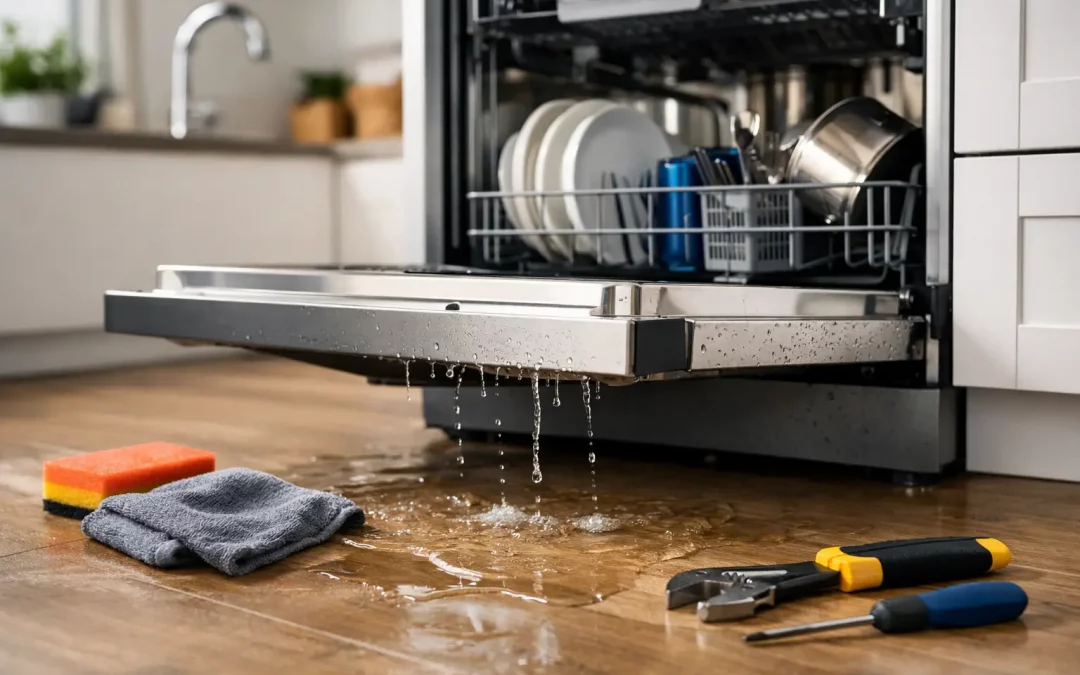
A small puddle near the dishwasher can become a damaged floor, swollen cabinet base, or hidden mold problem faster than most homeowners expect. The top causes of dishwasher leaks range from simple loading mistakes to failed internal parts, and the right next step depends on exactly where the water is coming from.
If water is actively spreading, turn off the dishwasher, avoid running another cycle, and place towels around the affected area. If you can safely access the shutoff valve under the sink, turn off the dishwasher water supply as well. Then look for visible clues without taking the appliance apart.
Top Causes of Dishwasher Leaks
A damaged or dirty door gasket
The rubber seal around the dishwasher door is one of the most common sources of a front-facing leak. It creates a watertight barrier while the appliance sprays and circulates water. Over time, the gasket can crack, flatten, loosen, or collect food residue that prevents the door from sealing properly.
You may notice water pooling directly below the door or running down the front panel. Open the door and inspect the gasket for tears, gaps, hardened spots, or debris. A gentle wipe with warm water can remove grime, but a torn or misshapen gasket needs replacement.
Do not force the door shut or use tape as a long-term fix. A proper gasket replacement is usually straightforward for a technician and can prevent repeat leaks during every wash cycle.
An unlatched door or damaged door latch
A dishwasher door has to close firmly for the seal to do its job. If the latch is loose, broken, or out of alignment, the door may appear closed while still leaving a small opening for water to escape under pressure.
This issue is more likely if the door pops open easily, does not click securely, or needs to be pushed hard to start a cycle. Bent hinges can also affect alignment, especially on older dishwashers or appliances that have been leaned on while open.
A latch adjustment may solve the problem, but cracked latch components or worn hinges should be repaired rather than ignored. Continued use can strain the door and turn an occasional drip into a steady leak.
A dishwasher that is not level
Dishwashers are designed to sit level from side to side and slightly stable from front to back. If the appliance shifts forward, water can collect against the door instead of draining as intended. If it leans to one side, water may escape at a corner or affect internal components.
This can happen after a new installation, kitchen flooring work, or repeated movement of the appliance. Check whether the dishwasher rocks when you press gently on its top corners. Also look for uneven spacing around the cabinet opening or a door that closes unevenly.
Leveling a dishwasher involves adjusting its feet and confirming that the unit is secure under the counter. It sounds minor, but correct installation matters. Over-adjusting the feet or leaving the unit unsupported can create new problems with the door, plumbing, or drain line.
Too much detergent or the wrong detergent
Suds do not belong in a dishwasher. Using regular dish soap, even by accident, can produce enough foam to push water out around the door. Too much dishwasher detergent can also create excessive suds, particularly in soft-water areas.
If you see foam coming from the bottom of the door, stop the cycle and do not add more soap or rinse aid. Remove standing suds carefully, then run a short rinse cycle only after the foam has settled. You may need to repeat the rinse cycle to clear the detergent completely.
Use detergent labeled specifically for automatic dishwashers and follow the product amount recommended for your water conditions. If the dishwasher leaks even with the correct detergent, the cause is likely mechanical rather than a suds issue.
A clogged filter or blocked spray arm
Food particles, broken glass, labels, and small utensils can interfere with water movement inside the dishwasher. A clogged filter may contribute to poor drainage, while a blocked or damaged spray arm can direct water where it should not go.
For example, a spray arm that is cracked or unable to rotate can repeatedly blast water toward the door seal. A tall cutting board, baking sheet, or improperly loaded pan may also stop the arm from spinning. The result can look like a failed door seal even when the gasket is still in good condition.
Remove the lower rack and check that the spray arm turns freely. Clean the filter according to your dishwasher’s instructions and remove any visible debris. If the spray arm is split, warped, or loose, replacement is often the practical repair.
A loose or damaged water supply line
A leak under the dishwasher is often related to the incoming water connection. The supply line carries water from the household plumbing to the dishwasher inlet valve. A loose fitting, worn hose, cracked elbow, or failing connection can release water beneath the appliance.
Because this leak is hidden, homeowners may not see it until water appears at the front edge of the dishwasher or on the adjacent cabinet floor. You may also notice moisture under the sink if the supply line connection is shared or routed nearby.
Do not keep running the dishwasher to test an under-unit leak. Pulling out a built-in dishwasher without disconnecting power, water, and drain connections correctly can cause more damage. A technician can identify whether the supply line, inlet valve, or another internal component is responsible.
A leaking drain hose or loose drain connection
The drain hose removes dirty water from the dishwasher at the end of the wash cycle. When it is cracked, loose, kinked, or improperly installed, water may leak only during draining. That timing is a helpful clue.
Check under the kitchen sink for dampness near the drain hose connection, garbage disposal inlet, or air gap if your kitchen has one. A loose hose clamp is sometimes the issue, but a deteriorated hose or poor routing may require replacement and correction.
A properly installed drain hose needs a high loop or another approved setup to prevent dirty sink water from flowing back into the dishwasher. This is not only about leaks. Incorrect drainage can leave standing water, odors, and poor wash results.
A failed pump, hose, or internal seal
Some leaks originate inside the dishwasher base, where homeowners cannot safely see the source. The circulation pump, drain pump, pump seal, sump, or internal hoses can wear out over time. These leaks may be small at first and appear only during certain parts of the cycle.
Signs of an internal leak include water emerging from underneath the appliance, a leak that happens during washing or draining but not when the dishwasher is off, unusual grinding sounds, or a dishwasher that stops mid-cycle. Some models have a float switch or leak sensor that may shut the appliance down when water reaches the base.
Internal leaks need professional diagnosis. The exact repair can vary widely by model, part availability, and the age of the dishwasher. Replacing a hose or seal can be worthwhile, while a major pump repair on an older appliance may call for a clear cost comparison before proceeding.
How to Narrow Down the Leak Source
The timing and location of the leak can help you describe the problem accurately. Water at the front of the dishwasher often points to the door gasket, latch, leveling, loading, or excess suds. Water under the unit may indicate a supply line, drain connection, pump, or internal hose.
Notice when it happens. A leak at the beginning of a cycle may relate to the fill system. A leak while dishes are washing may involve the door seal or spray arm. Water that appears near the end of the cycle often suggests a drain hose or pump concern.
Take a photo of the puddle location and note whether the dishwasher was filling, washing, or draining when you first saw it. This gives a repair technician a useful starting point and can shorten the on-site diagnosis.
When to Call for Dishwasher Leak Repair
Call for service promptly if water is coming from beneath the dishwasher, the appliance trips a breaker, the floor feels soft, or the same leak returns after basic cleaning and correct loading. Avoid using the dishwasher until the cause is identified. Repeated cycles can damage flooring and cabinets long before the appliance stops working completely.
For homeowners in Mississauga, Oakville, Brampton, Etobicoke, and Milton, Insta Fix Repairs can provide an on-site diagnosis, a clear estimate before repair, and a 90-day warranty on parts and labor. A technician can check the visible seals and connections, then inspect the components hidden behind the lower panel or inside the appliance base.
Dry the area thoroughly, keep an eye on nearby cabinet seams and flooring, and arrange repair before the next full load. A dishwasher leak is rarely convenient, but addressing it early is the simplest way to protect your kitchen and get back to a normal routine.