

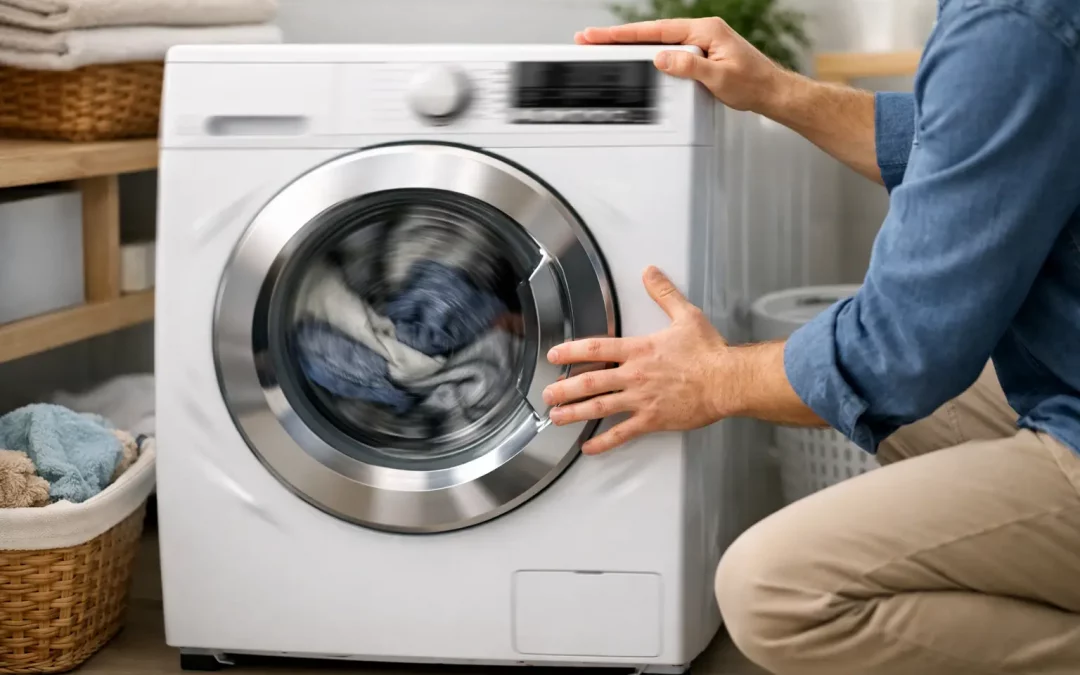
A washer that suddenly walks across the laundry room, bangs against the wall, or makes the floor vibrate can turn a normal load into a stressful problem. Washer shaking during spin cycle is often caused by an uneven load or an installation issue, but repeated violent shaking can also point to worn internal parts that need prompt attention.
The safest first move is simple: pause the machine, wait for the drum to stop completely, and check the load. Do not keep restarting a washer that is hitting cabinets, pulling on its hoses, or producing loud metal-on-metal sounds. A quick check may solve the issue, while continued use can damage the appliance, flooring, plumbing connections, or nearby walls.
Why Is Your Washer Shaking During Spin Cycle?
The spin cycle is when a washer moves at its highest speed to remove water from clothing. Even a small imbalance becomes much more noticeable at that speed. A machine can shake lightly during a heavy load, but it should not slam, hop, scrape, or move across the floor.
In many homes, the cause is straightforward. A bulky comforter, bath mat, or pair of heavy jeans may have gathered on one side of the drum. The washer then tries to spin with most of the weight concentrated in one spot. Stopping the cycle, redistributing the items, and restarting may restore a smooth spin.
However, if the same problem happens with normal mixed loads, the washer itself may not be sitting level. It may also have worn suspension components, damaged shock absorbers, or an issue with the drum support. The right repair depends on what the machine is doing, how severe the movement is, and whether the noise is new.
Start With These Safe Checks
Before assuming a major repair is needed, check the simple causes that homeowners can address safely. Unplug the washer before inspecting anything around its base or behind it.
First, open the door or lid and spread out the laundry. Avoid washing a single heavy item by itself whenever possible. Add a few towels or similar items to balance a bulky load, but do not overfill the drum. Both too little weight and too much weight can create an unstable spin.
Next, press down gently on each top corner of the washer. If it rocks, one or more leveling feet may not be firmly touching the floor. Most washers have adjustable feet underneath. The machine should sit solidly on all four corners, with no rocking when you press on it. A level can help, but a stable footing matters just as much.
Also look at the floor beneath the appliance. A washer installed on weak, uneven, or flexible flooring can vibrate more than one placed on a solid, level surface. Anti-vibration pads can reduce minor vibration, especially on hard flooring, but they will not fix worn internal parts or a severely unbalanced washer.
Finally, make sure the washer was installed correctly. If it is new or was recently moved, confirm that shipping bolts were removed from the back. These bolts secure the drum during transportation. Leaving them in place can cause extreme shaking and may damage the machine during operation.
Common Mechanical Problems Behind Severe Shaking
When balancing the load and leveling the machine do not solve the problem, a technician should inspect the washer. Front-load and top-load models use different suspension systems, but both rely on components that keep the drum stable while it spins.
Worn shock absorbers are common in front-load washers. These parts reduce the drum movement during high-speed spinning. As they wear out, the tub can bounce excessively, leading to loud thumping and noticeable shaking. Replacing shocks is usually more practical than continuing to run the washer until additional parts are damaged.
Top-load washers may develop weak suspension rods or springs. When these supports lose tension, the tub can swing too freely and strike the cabinet during spin. A worn suspension system often causes repeated out-of-balance errors, even when the load is evenly distributed.
Damaged tub bearings can also create serious vibration. Bearings support the drum as it rotates. If they are failing, you may hear a deep roaring, grinding, or rumbling sound that gets louder as the spin speed increases. Bearing repairs can be more involved, so an on-site diagnosis helps determine whether repair is the sensible option for the appliance’s age and condition.
A loose or damaged counterweight, drive component, or motor mount may also be responsible. These are not do-it-yourself repairs for most homeowners. The washer cabinet and drum assembly are heavy, and an incorrect repair can create electrical, water, or further mechanical problems.
Signs You Should Stop Using the Washer
Minor vibration is one thing. Certain symptoms mean the washer should stay off until it has been checked. Stop using it if you notice any of the following:
- The washer moves several inches or hits a wall during spin.
- You hear grinding, scraping, sharp banging, or repeated metal clanging.
- Water hoses, the drain hose, or the power cord are being pulled or strained.
- There is a burning smell, water leak, error code, or visible damage around the drum.
A loose washer can damage hose connections and create a leak behind the appliance, where the problem may not be obvious right away. If the machine has shifted significantly, check that the water supply valves and hoses are intact before running another cycle.
Avoid These Quick Fixes
It is tempting to keep adding towels, pushing the washer back into place, or placing heavy objects on top of it. Those steps may quiet the noise for one load, but they can hide a problem that is getting worse.
Do not try to hold the washer still while it spins. Do not wedge it against a wall or cabinet. This can damage the appliance exterior and put pressure on water lines. Likewise, avoid taking apart the cabinet without the right tools and experience. Washer drums, springs, and electrical connections require careful handling.
A proper diagnosis looks at the installation, load balance, suspension system, bearings, and drive components before recommending a repair. That approach prevents paying for a part that does not solve the underlying issue.
Fast Help for a Shaking Washer
If your washer is still shaking after you balance the load and check its footing, professional service can save time and prevent a larger repair. An experienced technician can identify whether the issue is a simple leveling adjustment, worn shocks, a suspension problem, or a more serious drum issue during an on-site visit.
For homeowners in Mississauga, Oakville, Brampton, Etobicoke, and Milton, Insta Fix Repairs provides clear, straightforward washer diagnosis with same-day service when availability allows. You receive an explanation of the problem, a transparent estimate before work begins, and a 90-day warranty on parts and labor for added confidence.
Your laundry routine should not include chasing a washer across the floor. Address severe shaking early, and you can protect your appliance, your home, and the next load waiting in the basket.