
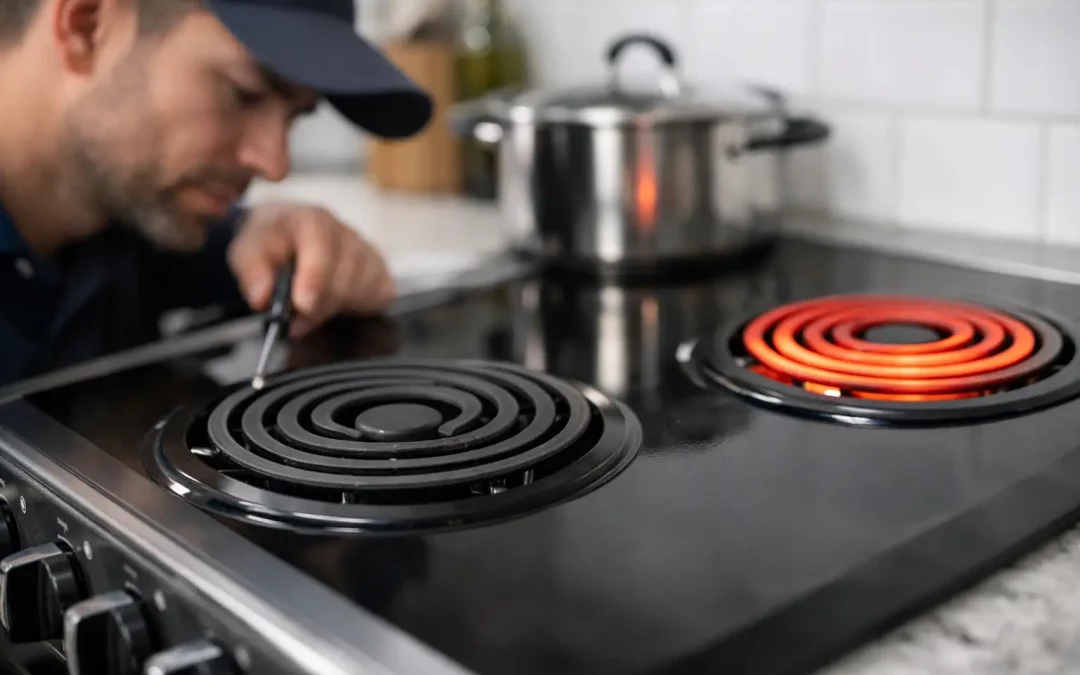
A burner that stays cold can stop dinner before it starts. If your electric stove burner not working problem affects one element, several elements, or the entire cooktop, the cause may be as simple as a loose connection or as involved as a failed control switch. The good news is that most electric range burner problems can be diagnosed clearly and repaired without replacing the whole appliance.
Start with the symptom, not the guess
An electric stove has a few different systems working together: the burner element, the receptacle or connection point, the control switch, internal wiring, and the power supply. Knowing exactly what the burner does helps narrow down the repair quickly.
Does the burner remain completely cold? Heat only on high? Cycle on and off at random? Get too hot even when set low? Or does the indicator light stay on after the burner has cooled? These are different symptoms with different likely causes.
Before checking anything, turn the burner control to Off and allow the cooktop to cool completely. Never remove panels or handle wiring while the range is connected to power. Electric stoves use high-voltage circuits, and a quick look can become unsafe if the appliance has not been properly disconnected.
Common reasons an electric stove burner is not working
The burner element has failed
For coil-top ranges, the heating element itself is often the first suspect. Over time, the element can develop an internal break, burn out, blister, or lose its ability to heat evenly. You may see visible damage, but not always. A coil can look normal and still fail internally.
If your stove uses plug-in coil elements and one similarly sized burner works properly, you can carefully swap the cooled elements between positions. If the problem follows the element, the element is likely the issue. If the working element also fails in the original location, the problem is probably in the receptacle, switch, or wiring instead.
A replacement element can be a straightforward repair when the part is correct for your range model. Using a generic-looking element that does not match the appliance can lead to poor fit, uneven heating, or damage to the connection.
The burner receptacle is worn or burned
On traditional coil-top stoves, the receptacle is the socket where the element plugs in. This part handles repeated heat cycles and can eventually become loose, charred, corroded, or melted. A loose connection may cause intermittent heat, sparking, or a burner that works only when moved a certain way.
Do not continue using a burner that sparks, smells burnt, or has visible black marks around the plug-in connection. Those signs can point to overheating at the receptacle and should be addressed before the problem damages the wiring behind the cooktop.
The infinite switch is defective
The infinite switch sits behind the control knob and regulates the burner temperature. It turns the element on and off in cycles to maintain the selected heat level. When this switch fails, the burner may not heat at all, may heat only at one setting, or may stay on high regardless of where the knob is set.
A burner that overheats is not a problem to put off. Turn the control off, avoid using that burner, and arrange service. A failed switch can create a safety concern because the element may continue receiving power when it should be cycling down.
The stove has a wiring or terminal problem
Heat, vibration, and age can loosen or damage wire connections inside the range. A burned terminal block, damaged wire, or loose connector can interrupt power to one burner. These repairs require access to internal components and should be handled by a qualified appliance technician.
This is especially true if the breaker trips when you use the burner, you hear popping sounds, or you notice a burning-plastic odor. Those are not normal signs of a worn burner. Stop using the appliance until it has been inspected.
The range is not receiving full power
Most electric ranges need a 240-volt supply. If one side of that supply is lost because of a tripped breaker, weak connection, or electrical issue, some stove functions may still appear normal while burners or the oven fail to heat correctly.
Check your electrical panel for a tripped double-pole range breaker. Reset it only once by switching it fully off and then back on. If it trips again, leave it off and call for service. Repeated breaker trips can signal an appliance fault or an electrical supply problem that needs professional attention.
A smooth-top burner or sensor has failed
Glass-ceramic cooktops do not use removable coil elements. Under the glass, they use radiant heating elements, sensors, and electronic controls. A failed radiant element may leave one cooking zone cold, heat only partially, or create inconsistent temperatures. A damaged touch control, relay board, or temperature limiter can cause similar symptoms.
Because smooth-top cooktops require partial disassembly and specialized testing, guessing at parts can get expensive quickly. A proper diagnosis confirms whether the fault is the element, control board, sensor, or power connection before a repair is approved.
Safe checks you can make before booking service
There are a few useful checks that do not require taking the stove apart. First, confirm that the burner is seated correctly if you have a coil-top range. A slightly misaligned element can fail to make solid contact with the receptacle.
Next, test another burner. If every burner is affected, the issue is more likely related to incoming power, the terminal block, or the range’s controls. If only one burner fails, the element, switch, or connection at that location is more likely.
Finally, consider what happened right before the issue began. Did the burner fail after a spill? Did it begin cycling strangely after a power outage? Has the knob felt loose or has the burner taken longer to heat for weeks? Small changes often provide the clue a technician needs to diagnose the failure efficiently.
Avoid using extension cords, repeatedly resetting a breaker, forcing an element into a damaged socket, or attempting to bypass a switch. Those shortcuts can increase the repair cost and create an electrical hazard.
When to call for electric stove burner repair
A burner that simply will not heat may be inconvenient, but a burner that sparks, overheats, trips the breaker, or gives off a burning smell needs prompt attention. The same applies if the surface indicator light remains on, the glass cooktop is cracked, or more than one cooking zone has stopped working.
Professional service is also the practical choice when the stove is hardwired, the repair involves internal wiring, or you are unsure whether the range is receiving full voltage. A technician can test the appliance safely, identify the failed part, explain the repair in plain language, and provide an estimate before work begins.
For homeowners who need their kitchen back quickly, Insta Fix Repairs provides fast, reliable electric stove and cooktop service with on-site diagnosis, transparent estimates, and a 90-day warranty on parts and labor. Same-day availability can help reduce the disruption when a meal plan, family routine, or busy week depends on a working stove.
Repair or replace: what makes sense?
Replacing one burner element, receptacle, or control switch is usually far less costly than replacing an entire electric range. Repair is often the sensible option when the stove is otherwise reliable, the cooktop surface is in good condition, and the required part is readily available.
Replacement may make more sense if the range has multiple major failures, extensive wiring damage, a cracked glass surface, or repeated control-board problems. Age matters, but it is not the only factor. The condition of the appliance, cost of the repair, and expected remaining life all deserve consideration.
A clear diagnosis gives you the information to decide confidently. Until then, use the unaffected burners only if there are no signs of electrical damage, and keep the failed burner turned off. A timely repair can turn a frustrating kitchen interruption into a small, manageable fix.