

A pool of dirty water at the bottom of the dishwasher can stop the whole kitchen routine. Dishwasher not draining repair often starts with a simple blockage, but it can also point to a failing pump, a clogged hose, or an installation issue that needs professional attention. The key is knowing which checks are safe to make and when not to risk a larger leak or electrical problem.
Start with these dishwasher not draining repair checks
Before touching filters or removing standing water, cancel the cycle and turn off power to the dishwasher at the breaker or unplug it if the plug is accessible. Let hot water cool first. Place towels around the base of the unit, then use a cup, sponge, or turkey baster to remove most of the water from the tub.
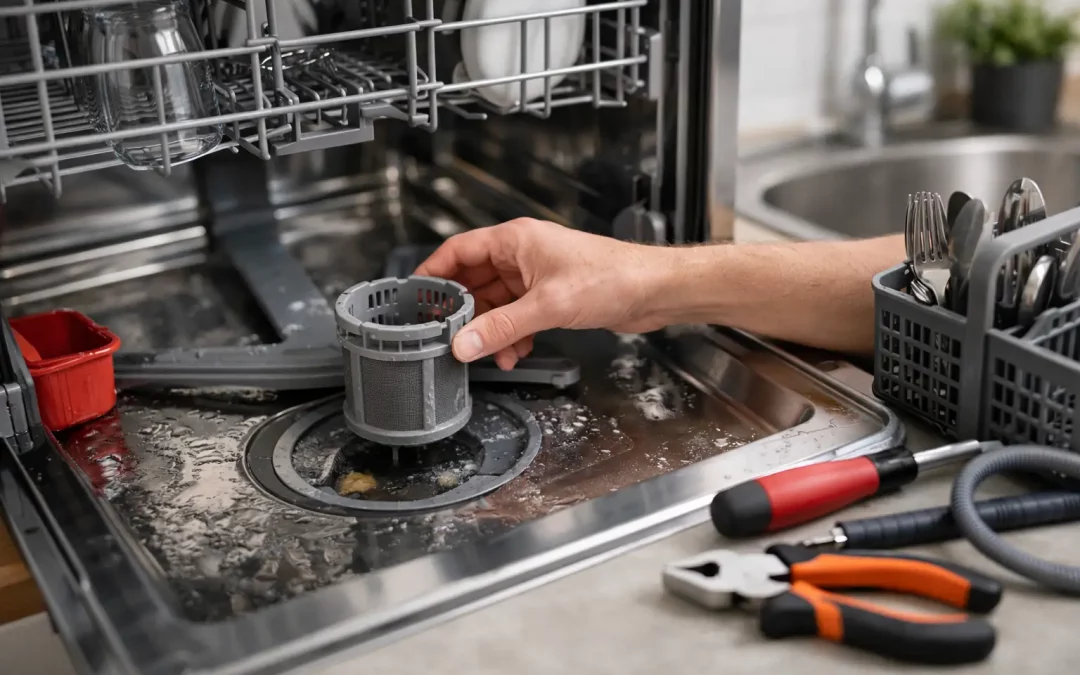
Next, check the dishwasher filter. Most models have a round or flat filter assembly at the bottom of the tub that twists or lifts out. Food particles, labels, broken glass, grease, and small utensils can restrict water flow through the drain system. Rinse the filter under warm water and use a soft brush to clear built-up debris. Do not force it back into place. A filter that is not seated correctly can create another drainage issue.
Look into the sump area beneath the filter for visible debris. If you can clearly see something blocking the drain opening, carefully remove it while wearing gloves. Broken glass is common, so avoid reaching in blindly.
If the dishwasher is connected to a garbage disposal, run the disposal with cold water for several seconds. A disposal packed with food waste can prevent the dishwasher hose from draining. This is especially common after a large meal or when the dishwasher begins backing up soon after the disposal is used.
For a recently installed dishwasher, confirm that the disposal’s dishwasher inlet plug was removed during installation. If that knockout plug is still in place, the dishwasher cannot drain at all. This is a quick fix for a technician, but it should not be guessed at or forced if you are unsure how the drain connection is configured.
What the symptoms can tell you
The timing of the problem helps narrow down the cause. If water remains after every cycle but the dishwasher otherwise runs normally, a clogged filter, drain hose, or disposal connection is likely. If you hear a low hum during the drain portion of the cycle but no water moves, the drain pump may be jammed or failing.
A dishwasher that drains slowly may have grease or food buildup inside the hose. It may also have a hose that is kinked behind the cabinet. Moving the dishwasher without disconnecting it properly can pinch the hose, which restricts drainage and may eventually cause a leak.
Water backing up into the dishwasher when the kitchen sink drains usually points to a plumbing or disposal issue rather than the dishwasher itself. In that situation, running another dishwasher cycle will not solve the problem. The sink drain needs to be checked first.
Some dishwashers stop mid-cycle and display an error code when they cannot drain. The exact code depends on the brand and model, but the message is useful information for a service technician. Take a photo of the display and note whether the unit made unusual noises, leaked, or failed to complete the wash cycle.
Check the drain hose and air gap carefully
The drain hose carries water from the dishwasher to the disposal or sink drain. It should be routed high under the countertop before it drops to the drain connection. This high loop helps keep dirty sink water from flowing backward into the dishwasher.
If your sink has an air gap, it is usually a small cap near the faucet. Remove the cap and look for debris inside. A clogged air gap can cause water to spill onto the counter or prevent the dishwasher from draining properly. Clean it with warm water and a small brush, then run a short rinse cycle to see whether drainage improves.
Do not pull a built-in dishwasher out of its cabinet just to inspect the hose unless you are comfortable disconnecting power, water, and mounting hardware. A drain hose can look fine from the outside while being split, loose, or obstructed behind the unit. Pulling the appliance forward without securing the water line can turn a drainage repair into a kitchen-floor leak.
When a drain pump is likely the problem
The drain pump is responsible for pushing used water out of the dishwasher. It can fail because of normal wear, an electrical fault, or an object stuck in the pump housing. Small pieces of glass, bone fragments, twist ties, and labels are frequent culprits.
A failing pump may make a grinding, rattling, humming, or unusually loud buzzing sound. In some cases, the dishwasher is completely quiet during the drain cycle because the pump is no longer receiving power or has failed internally. Pump replacement is not always the right answer, though. A technician should first confirm whether the issue is the pump, wiring, control board, hose, or drain connection.
This diagnosis matters because replacing parts without testing them can waste money. A clear on-site estimate after the problem is identified gives you a better basis for deciding whether repair makes sense, particularly with an older dishwasher that has had repeated issues.
Avoid these common mistakes
A few well-meant fixes can make dishwasher drainage problems worse. Skip these shortcuts:
- Do not pour chemical drain cleaner into the dishwasher. It can damage seals, hoses, and internal components, and it creates a safety hazard for anyone servicing the machine.
- Do not run repeated cycles with standing water in the tub. Overflow can damage flooring, cabinets, and nearby electrical connections.
- Do not use a sharp object to poke aggressively into the pump or drain opening. You can damage the impeller or leave broken material inside.
- Do not ignore a leak at the dishwasher base. A drainage restriction and a door or hose leak can happen at the same time.
A dishwasher cleaner can help reduce light grease buildup as part of regular maintenance, but it will not clear a blocked hose, failed pump, or disposal connection. If the problem returns after you clean the filter, it is time for a more complete inspection.
When to schedule professional dishwasher repair
Call for service when the dishwasher still holds water after the filter and disposal checks, when it makes unusual drain-cycle noises, or when you see leaking under the unit. Fast help is especially worthwhile if you have a busy household and cannot leave dishes sitting in dirty water for days.
A qualified technician can inspect the filter system, sump, drain pump, drain hose, disposal connection, air gap, wiring, and electronic controls. They can also check for installation issues that are easy to miss, including improper hose routing and loose connections. The goal should be a clear explanation of what failed, what the repair involves, and what it will cost before work begins.
For homeowners who need prompt, straightforward help, Insta Fix Repairs provides on-site dishwasher diagnosis, transparent estimates, and same-day service when available. Repairs are backed by a 90-day warranty on parts and labor, so you are not left wondering whether the fix will hold.
A dishwasher that will not drain rarely improves on its own. Clean the accessible filter, check the disposal connection, and stop there if the water remains or the appliance is making noise. A timely repair can protect your kitchen from water damage and get your daily routine back on track.