

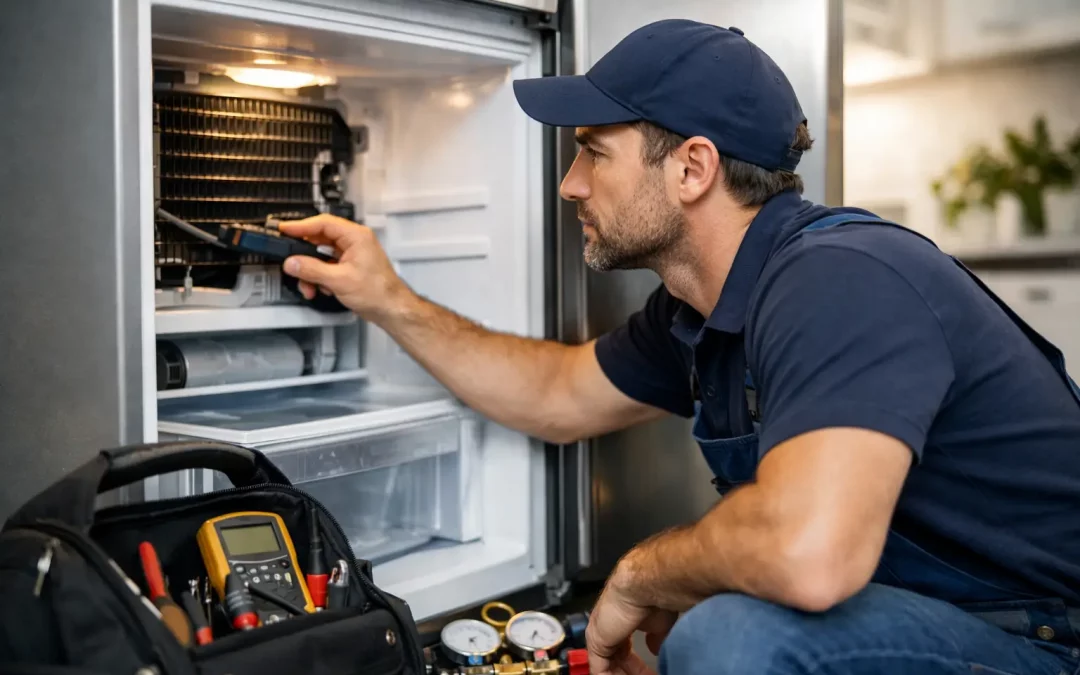
A refrigerator that suddenly feels warm can turn a normal evening into a race to save groceries. Refrigerator not cooling repair starts with identifying whether the issue is a simple airflow problem, a temperature setting, or a component that needs professional attention. The right next step can protect your food, prevent a larger breakdown, and get your kitchen back to normal faster.
Start With Food Safety
A refrigerator should hold food at or below 40°F. If the interior is noticeably warm, limit how often you open the doors and move milk, meat, leftovers, and other perishables to a cooler with ice if possible. Food that has been above 40°F for more than two hours may no longer be safe to eat.
Do not rely on a fridge that feels slightly cool to the touch. Use an appliance thermometer if you have one. A refrigerator can have a cold rear wall or freezer compartment while still failing to maintain a safe temperature in the fresh-food section.
Refrigerator Not Cooling Repair: Safe Checks First
Before booking service, there are a few safe checks that may reveal an obvious cause. These steps do not require disassembling the appliance or handling electrical components.
First, confirm the refrigerator has power. The interior lights may work even when a cooling component has failed, but a blank display, tripped breaker, loose plug, or damaged power cord should be addressed first. If the outlet or cord appears damaged, stop using the appliance and call a qualified technician.
Next, check the temperature controls. A door can be bumped, or a digital control can be changed accidentally. Set the refrigerator to about 37°F and the freezer to 0°F, then allow several hours for temperatures to stabilize. Turning the controls to their coldest setting is not always the solution. It can restrict airflow or cause frost issues on some models.
Make sure nothing is blocking the interior air vents. Overpacked shelves, large containers against the back wall, and items placed directly in front of vents can keep cold air from circulating. This is especially common when the freezer is cold but the refrigerator compartment is warm.
Look at the door gaskets as well. A torn, dirty, or loose seal allows warm kitchen air inside and forces the refrigerator to run longer. Wipe the gasket clean and check that the door closes without gaps. If the refrigerator rocks or sits unevenly, the door may not be sealing properly.
Finally, inspect the condenser area only if it is safely accessible. Dust, pet hair, and debris around the coils can trap heat and reduce cooling performance. Unplug the refrigerator before gently vacuuming accessible coils or the lower grille. If the coils are difficult to reach or the unit is built in, leave the work to a technician to avoid damaging parts or panels.
Common Signs Behind a Warm Refrigerator
The symptoms matter because they help narrow down the cause. A skilled technician uses these details during an on-site diagnosis rather than replacing parts based on guesswork.
- The freezer is cold but the refrigerator is warm. This often points to restricted airflow, a failed evaporator fan, a stuck air damper, frost buildup, or a defrost-system problem.
- Both sections are warm. Possible causes include dirty coils, a failed condenser fan, compressor or start-relay issues, electronic control failure, or a sealed-system concern.
- The refrigerator runs constantly. Poor door seals, blocked airflow, dirty coils, frost buildup, or a failing cooling component can all make the appliance work without reaching the set temperature.
- There is heavy frost on the freezer back wall. Frost can block the evaporator coil and prevent cold air from reaching the refrigerator section. This usually requires diagnosis of the defrost heater, sensor, control, or related components.
- You hear clicking, buzzing, or repeated starts. Occasional operating sounds are normal. Repeated clicking with poor cooling is not and may indicate a compressor-start or electrical issue.
A refrigerator may also cool inconsistently. It might seem fine in the morning but become warm by evening, or it may cool only near one shelf. These intermittent problems are often harder to diagnose without testing the fans, sensors, controls, and cooling system under normal operating conditions.
When a Reset or Defrost May Help
If there is no burning smell, water leak near electrical parts, or unusual loud noise, unplugging the refrigerator for five minutes and restoring power can sometimes reset an electronic control. This is a reasonable first step after a power outage or display error, but it is not a repair for a failed part.
A full manual defrost can temporarily restore airflow if the evaporator is covered in ice. Move food to a safe location, unplug the appliance, open the doors, and let all frost melt completely. Place towels around the base to manage water. Never chip ice with a knife, screwdriver, or sharp tool, since puncturing an internal panel or refrigerant line can turn a repairable issue into a costly replacement.
If the refrigerator cools normally after defrosting but becomes warm again days or weeks later, the underlying defrost problem is still present. That is the point to schedule service rather than repeating the cycle and risking spoiled food.
Why Professional Diagnosis Saves Time
Modern refrigerators combine electrical controls, fans, sensors, defrost components, and sealed cooling systems. Several failures can create the same symptom, which is why online advice often leads homeowners to replace a part that was never the problem.
For example, a warm refrigerator with a cold freezer could be caused by frost, a fan motor, a damper, or an airflow blockage. A refrigerator that is warm everywhere may have a control issue, fan problem, compressor-start failure, or refrigerant-system issue. The repair approach depends on the model, the measured temperatures, the sound of the unit, and test results from the components.
A qualified appliance technician can diagnose the cause on site, explain the repair in plain language, and provide a clear estimate before work begins. This is particularly valuable for Samsung, Whirlpool, GE, and other mainstream models with electronic controls and model-specific parts.
Avoid attempting repairs involving the compressor, refrigerant lines, wiring, or capacitors. These systems require the right equipment, technical knowledge, and, in some cases, regulated refrigerant handling. Replacing the wrong part can add cost without bringing back reliable cooling.
Repair or Replace: What Makes Sense?
Refrigerator repair is often the practical choice when the appliance is relatively new, in good overall condition, and needs a common service part such as a fan, sensor, defrost component, gasket, or control. A repair can also make sense when the replacement cost is high or the refrigerator is a built-in size that is difficult to match.
Replacement may be worth considering when the unit has a major sealed-system or compressor issue, is well beyond its expected service life, or has multiple recurring problems. The decision depends on the age, model, repair estimate, availability of parts, and the condition of the appliance as a whole. A trustworthy technician should help you understand those trade-offs instead of pushing a repair that does not make financial sense.
Get Your Refrigerator Cooling Again
When food storage is at risk, waiting several days for answers is frustrating. Insta Fix Repairs provides homeowners in Mississauga, Oakville, Brampton, Etobicoke, Milton, and nearby Ontario communities with fast scheduling, on-site refrigerator diagnosis, transparent estimates, and a 90-day warranty on parts and labor.
Have the refrigerator model number ready when you call, along with a quick description of what is happening: whether the freezer is cold, when the issue started, any error codes, unusual sounds, and whether you see frost or water. Those details help speed up the visit and make refrigerator not cooling repair more straightforward.
A warm refrigerator is rarely a problem to ignore overnight. Protect your groceries, complete the safe checks, and arrange professional help if temperatures do not return to normal quickly.