A refrigerator stops cooling the night before a big grocery run, or the washer quits with a full load still inside. In that moment, one question comes first for most homeowners: what is the average cost of appliance repair? The short answer is that most repairs land somewhere between $150 and $450, but the real price depends on the appliance, the failed part, the brand, and how quickly you need service.
For most households, the service call itself is only one piece of the total. A technician typically charges for diagnosis, labor, and any replacement parts. That means a simple fix like a clogged dishwasher drain can cost far less than a refrigerator compressor issue or an electronic control board replacement on a high-end wall oven. If you are trying to decide whether to book service or start shopping for a new appliance, knowing the usual ranges helps you make a smarter call fast.
What is the average cost of appliance repair by appliance?
While prices vary by market and model, these are common repair ranges homeowners see for major household appliances:
Refrigerator repairs often fall between $200 and $500. A thermostat, fan motor, defrost issue, or ice maker problem may stay near the lower end, while sealed system problems or compressor-related work can move much higher.
Dishwasher repairs usually run about $150 to $350. Drain pump issues, latch problems, inlet valve failures, and spray arm faults are often repairable without reaching replacement-level cost.
Washing machine repairs commonly range from $180 to $400. Drain pumps, lid switches, door locks, belts, and suspension components are all fairly common. More complex electrical or motor-related failures can increase the bill.
Electric dryer repairs are often between $150 and $300. Heating elements, thermostats, thermal fuses, rollers, and belts are frequent issues and usually worth repairing if the unit is otherwise in good condition.
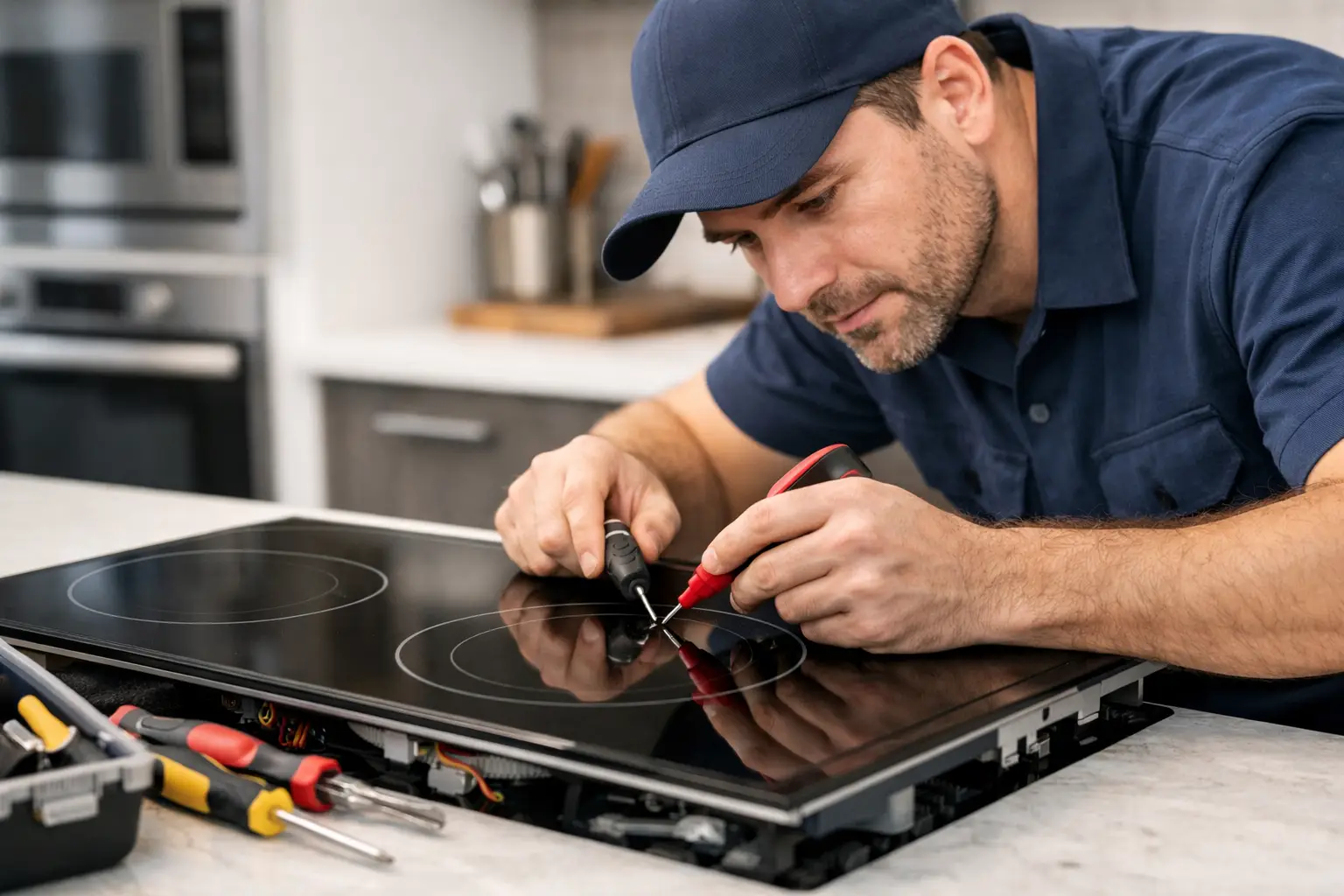
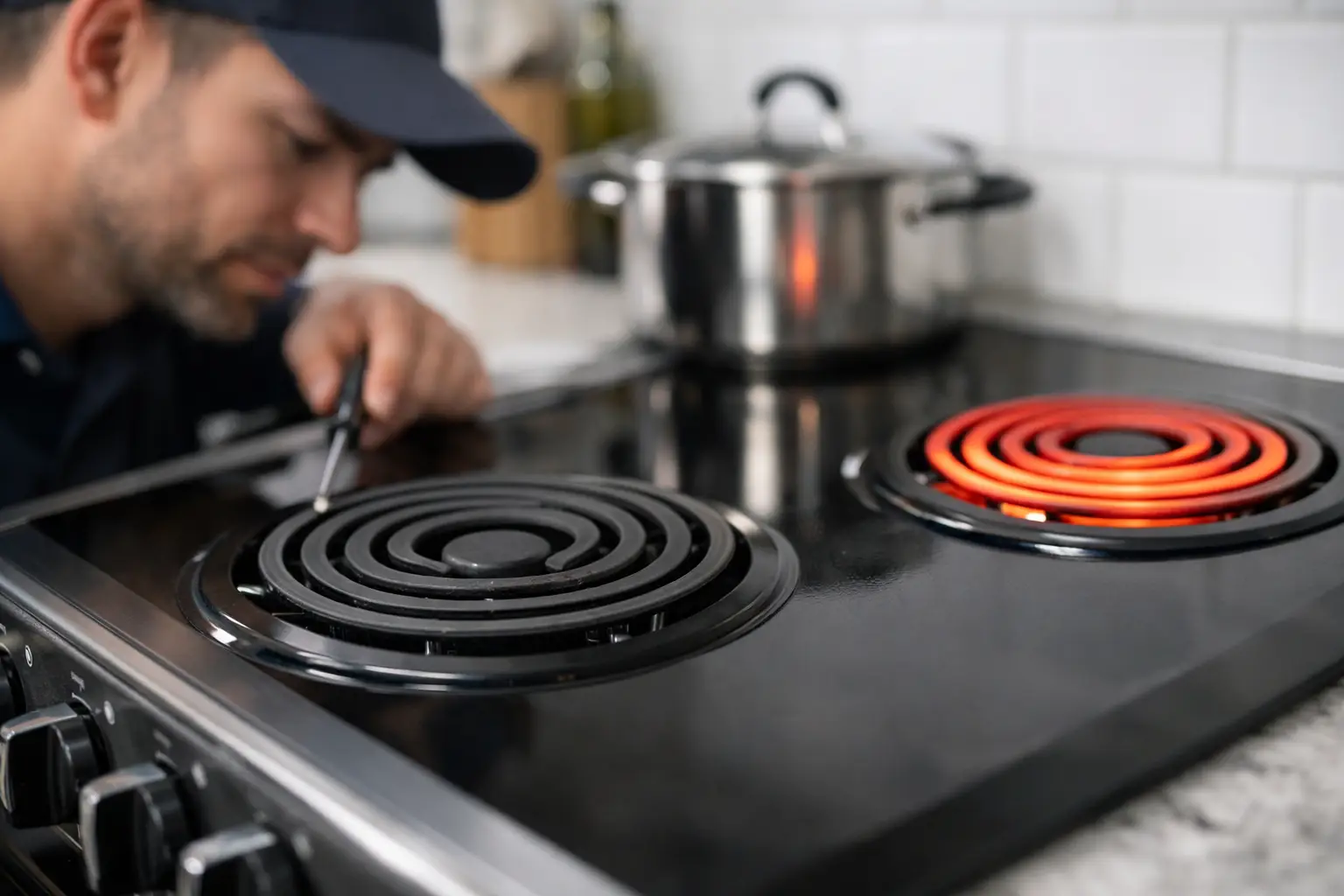
Electric stove and cooktop repairs generally cost $150 to $350. Surface burners, infinite switches, receptacles, and wiring repairs are often straightforward. Glass-top damage or major control failures can push cost upward.
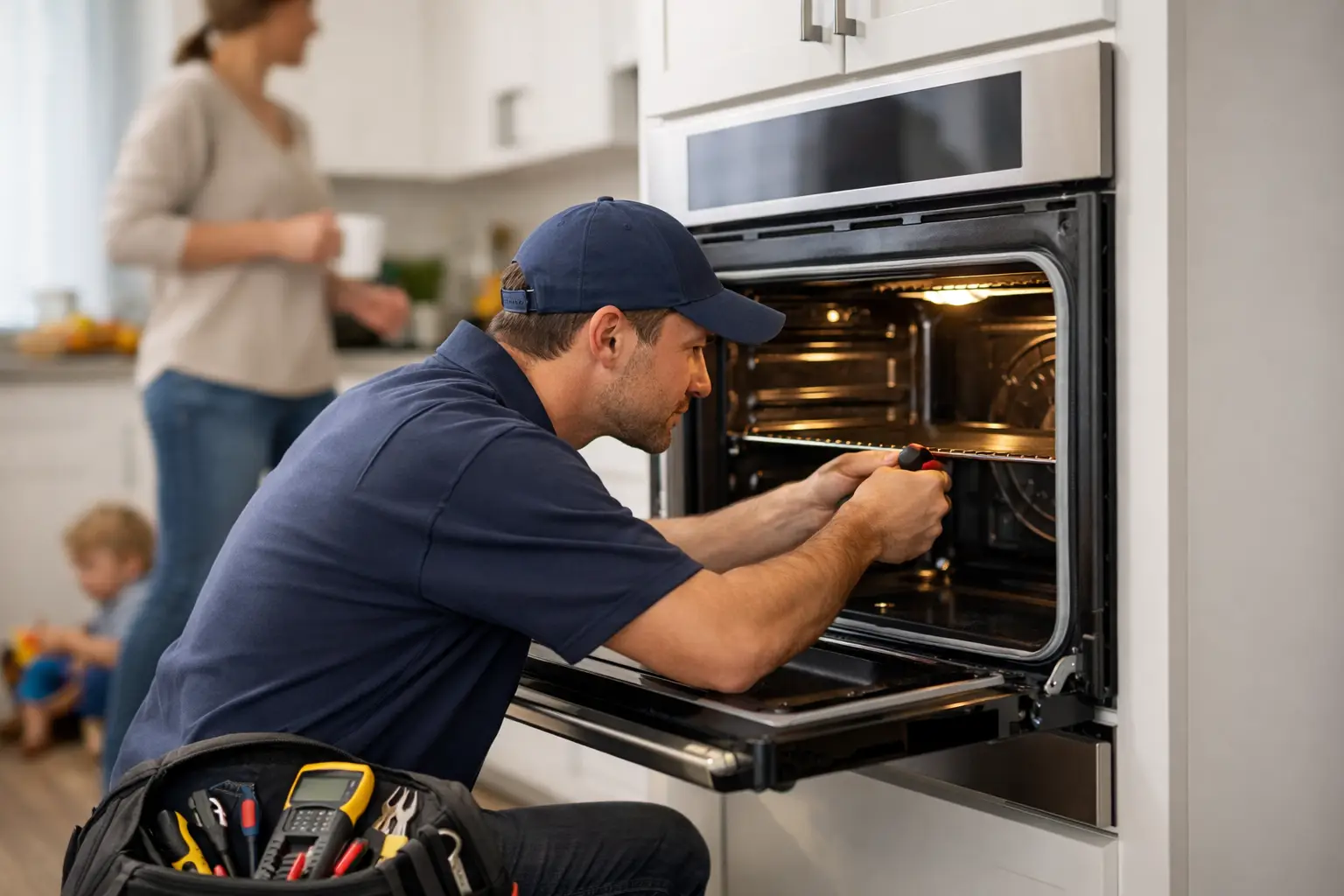
Electric wall oven repairs tend to fall between $200 and $450. Bake elements, broil elements, igniters on electric-assisted systems, temperature sensors, and control boards all affect the final price.
Microwave repairs are often around $150 to $300, though built-in units can cost more because access and parts can be more involved. Door switches, turntable motors, and certain fuse-related issues may be economical to fix.
Wine cooler repairs usually range from $180 to $400 depending on size, cooling system design, and whether the issue is electronic or compressor-related.
These are averages, not guarantees. A minor fix can come in below these numbers, and a major internal failure can go well above them.
What actually drives the repair bill
The biggest factor is usually the part itself. A thermal fuse or door latch is very different from a main control board, circulation pump, or compressor component. Labor matters too. Some repairs take under an hour. Others require pulling out a built-in unit, disassembling multiple panels, testing several systems, and reassembling everything safely.
Brand also affects pricing. Mainstream models from Whirlpool, GE, Frigidaire, LG, or Samsung often have more accessible parts than specialty or premium brands. That does not always mean cheap, but it can mean faster diagnosis and more predictable repair costs.
Appliance age plays a role as well. Older units can be simpler to work on, but parts may be harder to find. Newer units often include more electronics, sensors, and boards, which can improve performance but also raise repair cost when something fails.
Then there is urgency. Same-day or emergency scheduling is valuable when your fridge is warming up or laundry is backing up, but timing can affect pricing depending on the company and the repair needed.
The service call fee vs. total repair cost
One point that confuses homeowners is the difference between a service call and the full repair total. The service call usually covers the trip to your home and the diagnostic visit. That means the technician identifies the problem, explains what failed, and gives you a quote.
In many cases, that diagnostic fee is applied toward the repair if you approve the work. In other cases, it remains a separate charge. That is why transparent estimates matter. You want to know what you are paying for before parts are ordered or labor begins.
A trustworthy repair company should be able to explain the estimate in plain language. You should know whether the quote includes labor, parts, and warranty coverage, not just a rough number over the phone.
When appliance repair is worth it
A repair usually makes sense when the fix is significantly less than replacement and the appliance still has useful life left. That is especially true for built-in or premium appliances, where replacement cost is high and installation adds more expense.
Dryers, dishwashers, and electric ranges are often good candidates for repair because many common failures are limited to one part and labor is manageable. Washers and refrigerators can also be worth repairing, but the answer depends more on age and the type of failure.
A common rule homeowners use is the 50 percent guideline. If repair costs less than half the price of a comparable new appliance, repair is often reasonable. If the unit is older and the repair gets close to that line, replacement may make more sense.
That said, the cheapest option on paper is not always the best one in real life. Replacing a refrigerator quickly can mean delivery delays, food loss, and disposal costs. Repairing a dishwasher or oven may restore normal routine in a single visit. Convenience matters, especially for busy households.
When replacing the appliance may be smarter
There are times when repair is not the best investment. If the appliance has repeated problems, visible rust or structural wear, or multiple failing components, a single repair may only buy a little more time.
You should also be cautious with major sealed system refrigerator repairs or expensive electronic failures on older appliances. If one high-cost part fails on a 12- to 15-year-old unit, there is a fair chance another issue could follow. In that situation, a good technician should tell you honestly when replacement is the better long-term move.
Energy use can be part of the decision, though it should not be the only factor. New appliances may be more efficient, but the savings usually take time to offset the full purchase and installation cost.
How to keep repair costs from climbing
The simplest way to control cost is to act early. Strange noises, poor draining, longer dry times, uneven heating, and water leaks often start as smaller issues. If you wait until the appliance fully stops, the repair can become more involved.
Basic maintenance helps too. Clean refrigerator coils when accessible, avoid overloading washers and dryers, keep dishwasher filters clear, and make sure vents are not blocked. These steps will not prevent every breakdown, but they do reduce strain on key components.
It also helps to have the model number ready when you call. That allows the technician to check common parts, estimate repair likelihood, and arrive better prepared. For homeowners who want fast answers, that can mean fewer delays and a smoother visit.
What to ask before you book
If you are comparing service companies, focus on clarity instead of just the lowest advertised number. Ask whether the diagnostic fee goes toward the repair, whether parts and labor are covered by warranty, and whether the estimate is given before work begins.
You should also ask whether the company repairs your specific appliance type and brand regularly. Experience matters. A technician who works on refrigerators, dishwashers, washers, dryers, electric stoves, wall ovens, microwaves, and wine coolers every day is more likely to diagnose the issue efficiently.
For homeowners dealing with an urgent breakdown, speed matters too. A company like Insta Fix Repairs stands out when it combines same-day availability, on-site diagnosis, and straightforward estimates, because that reduces the guessing and gets the appliance decision made faster.
The real answer to average repair cost
So, what is the average cost of appliance repair? For most homeowners, it is fair to expect a typical repair to fall between $150 and $450, with some simple fixes below that range and major component failures above it. The best way to judge the number is not by averages alone, but by what failed, how old the appliance is, and whether the repair gives you reliable use for years instead of months.
When an appliance breaks, the goal is not just to spend less. It is to get your kitchen or laundry routine back without wasting money on the wrong fix. A clear diagnosis, a fair estimate, and honest advice will always save more than guessing.
0 Comments