A wall oven that will not heat, takes twice as long to bake, or shuts off halfway through dinner can disrupt the entire household. Professional electric wall oven repair helps identify the real cause quickly, so you are not left guessing whether the problem is a setting, a worn part, or an electrical issue that needs attention.
For homeowners, the goal is simple: get the oven working safely without unnecessary delays or surprise costs. A qualified technician can diagnose the issue on-site, explain the recommended repair in plain language, and provide a clear estimate before work begins.
When Your Wall Oven Needs Repair
Electric wall ovens are built to handle daily use, but heating components, controls, sensors, and door parts eventually wear out. Some problems appear suddenly, while others start with small changes in cooking performance that become harder to ignore over time.
Call for service if your oven shows one or more of these signs:
- The oven will not turn on, display a temperature, or respond to controls.
- It heats slowly, runs too hot, or never reaches the selected temperature.
- Food cooks unevenly, even after adjusting rack position and bake settings.
- The oven turns off during a cycle, trips a breaker, or shows an error code.
- The door will not close properly, lock, unlock, or seal in heat.
An oven that is not heating correctly is more than an inconvenience. It can lead to undercooked food, burned meals, wasted energy, and repeated frustration when you are trying to feed your family. If the unit trips a breaker, produces a burning smell, sparks, or has visible damage around the wiring, stop using it and arrange service promptly.
Common Electric Wall Oven Problems
Oven Is Not Heating or Heating Unevenly
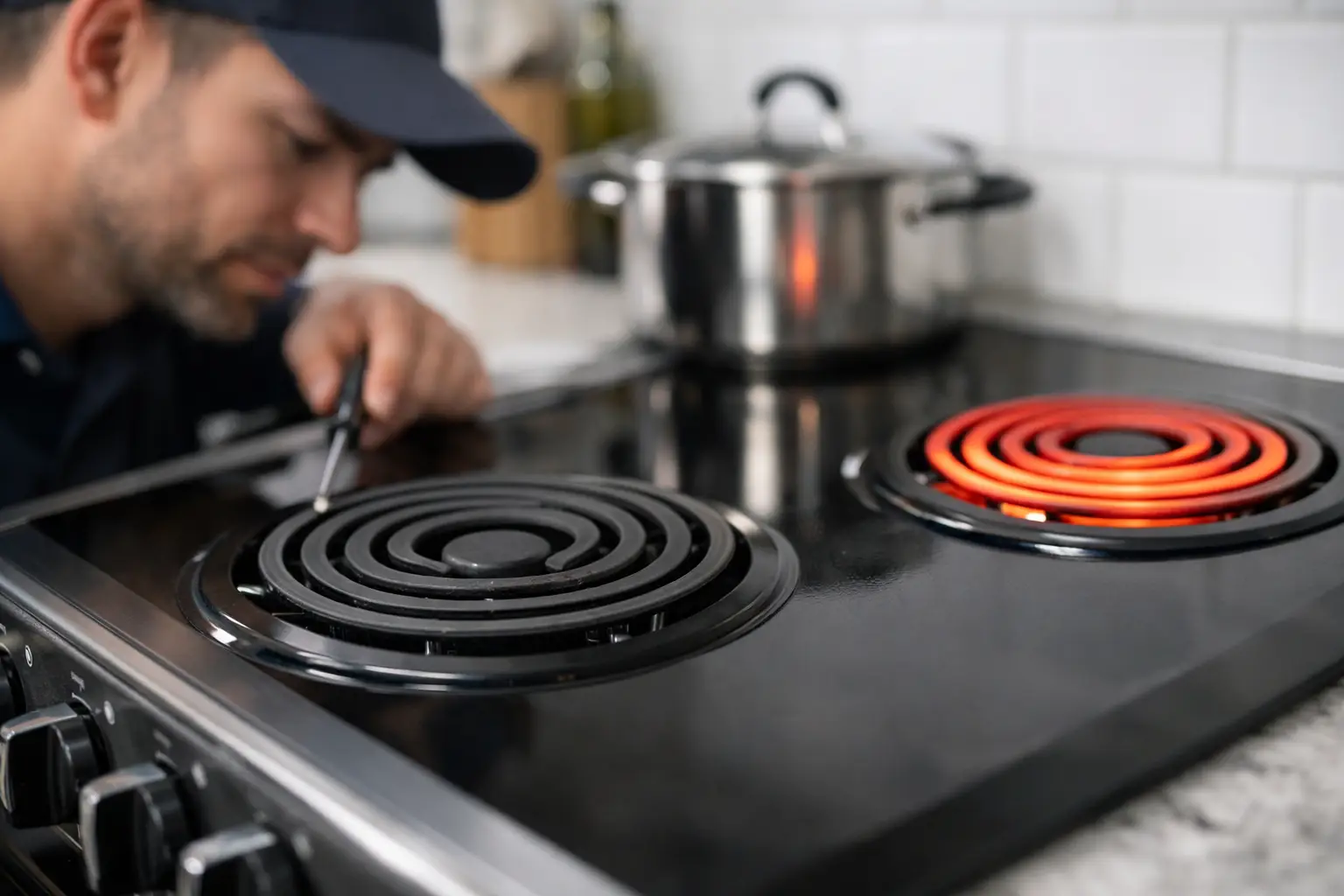
A failed bake element or broil element is a common reason an electric oven stops heating. In some models, an element may be visibly cracked, blistered, or burned through. In others, it can fail without obvious visible damage.
Uneven heating can also come from a faulty temperature sensor, damaged convection fan, worn relay, or control board problem. A technician tests the components rather than replacing parts based on guesswork. That matters because the same symptom can have several causes, and the right repair depends on what is actually failing.
Oven Temperature Is Wrong
If recipes that once worked well are suddenly underbaked or overdone, the oven may be running at the wrong temperature. A temperature sensor can drift out of range, or the electronic control may not regulate the heating cycle correctly.
Some ovens allow basic temperature calibration through the control panel. However, calibration will not solve a failed sensor or control issue. When the difference is significant or inconsistent, an on-site diagnosis is the safest way to avoid wasting time on adjustments that will not hold.
Control Panel, Display, or Touchpad Is Not Working
A blank display, unresponsive buttons, flashing clock, or recurring error code can point to a control panel, user interface, wiring, or electronic control board issue. Power interruptions can sometimes affect a display temporarily, but repeated failures should not be ignored.
Modern wall ovens rely on electronic controls to manage temperature, cooking modes, and safety features. Because these parts are model-specific, a technician should confirm the exact source of the problem before recommending replacement.
Oven Door Will Not Close or Lock
A loose hinge, broken door spring, damaged gasket, or failed lock assembly can prevent the door from sealing properly. Heat escapes when the door does not close evenly, which affects cooking results and can make surrounding cabinetry hotter than normal.
Door lock problems are especially common around self-cleaning cycles. If the door remains locked after a cycle ends, avoid forcing it open. The lock mechanism, latch switch, or control system may need repair.
Why DIY Electric Wall Oven Repair Can Be Risky
Replacing an oven light bulb or cleaning removable racks may be straightforward. Diagnosing electrical components inside a built-in wall oven is different. The appliance uses high-voltage power and is installed within cabinetry, so access, wiring, and safe removal all matter.
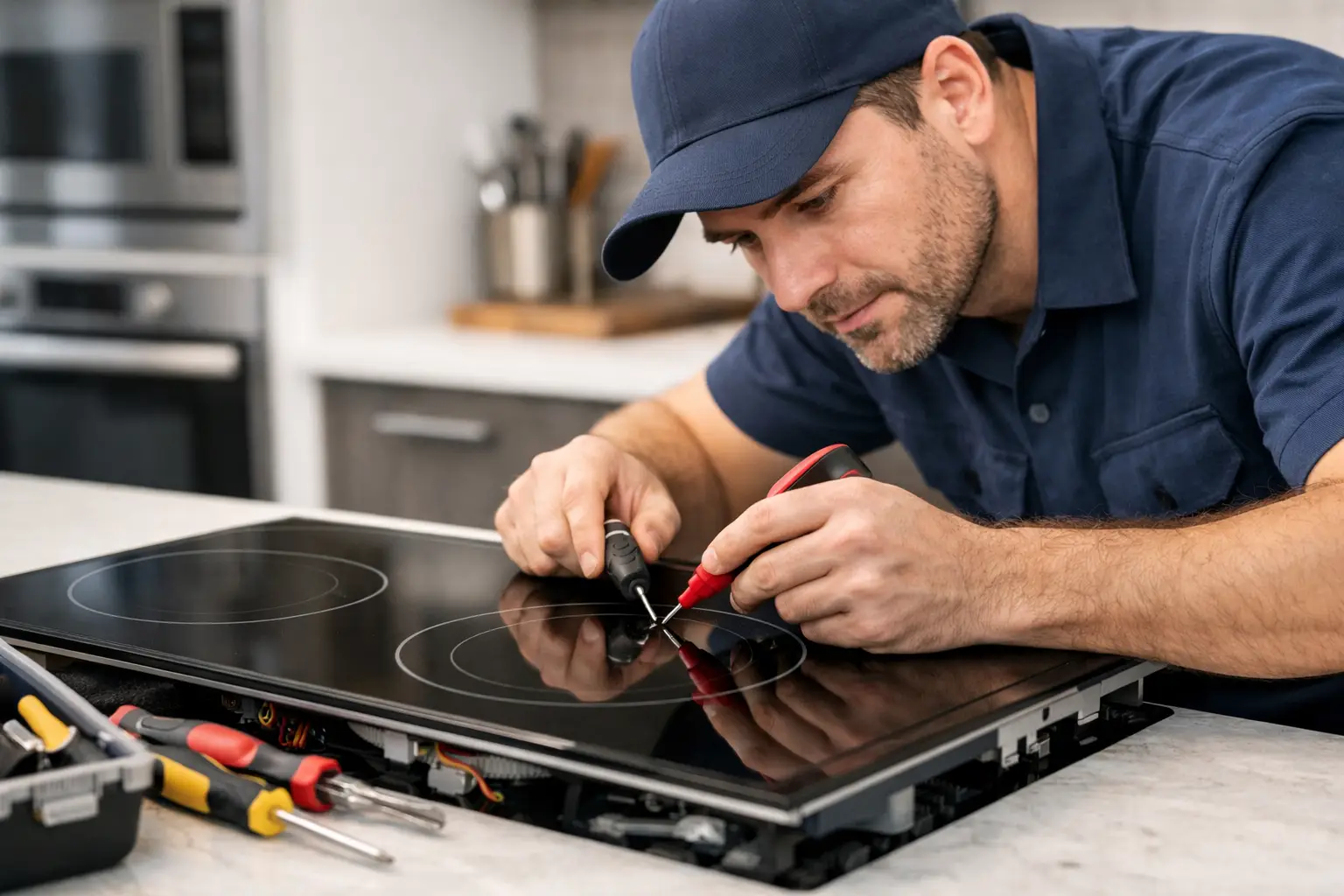
Turning off power at the breaker is essential before any inspection, but it does not make every repair a DIY project. Heating elements, thermal fuses, sensors, wiring terminals, and control boards need proper testing equipment and model-specific knowledge. An incorrect repair can damage the oven further, create a shock hazard, or leave a safety issue unresolved.
There is also a practical question: is the repair worth it? That depends on the oven’s age, overall condition, part availability, and the cost of the needed component. A professional diagnosis gives you the information to make that decision with confidence rather than spending money on a part that may not solve the problem.
What to Expect From Electric Wall Oven Repair
A dependable repair visit should make the process easier, not add more uncertainty. Start by sharing the oven brand, model number if available, and the symptoms you have noticed. Details such as error codes, unusual noises, timing of the failure, and whether the oven still heats can help narrow down the issue.
During the appointment, the technician inspects the unit, checks key components, and identifies the likely cause. You should receive a straightforward explanation of what is wrong, what repair is recommended, and what the cost will be before work proceeds.
Insta Fix Repairs provides on-site diagnosis and clear estimates for homeowners in Mississauga, Oakville, Brampton, Etobicoke, Milton, and nearby Ontario communities. When scheduling allows, same-day service can help get an essential kitchen appliance back in operation without a long wait. Repairs are backed by a 90-day warranty on parts and labor for added peace of mind.
Repair or Replace Your Wall Oven?
Many electric wall oven problems can be repaired cost-effectively, especially when the unit is otherwise in good condition. A failed heating element, sensor, hinge, fan motor, or door latch is often a targeted repair. Replacing the appliance may make more sense when it has multiple major failures, extensive damage, or parts that are no longer available.
Built-in ovens require more planning than freestanding ranges because cabinet dimensions, electrical connections, and trim fit can affect replacement options. Before making a quick replacement decision, it is worth getting a professional assessment. A repair may restore reliable performance for far less than the cost and disruption of installing a new wall oven.
Simple Steps to Help Your Oven Last Longer
Regular care cannot prevent every failure, but it can reduce avoidable wear. Clean spills once the oven has cooled, especially sugary or acidic spills that can damage surfaces. Check the door gasket occasionally for tears, flattening, or loose sections, and avoid slamming the door or placing excessive weight on it.
Use the self-cleaning feature carefully and according to the manufacturer’s instructions. The high temperatures involved can place added stress on door locks, thermal components, and controls, particularly in an older appliance. If your oven has been unreliable or has shown error codes, arrange service before running a self-clean cycle.
When cooking plans depend on a working oven, waiting rarely makes the problem easier or less expensive. A fast diagnosis and honest repair advice can help you return to normal meals with less disruption and more confidence in the appliance you use every day.
0 Comments